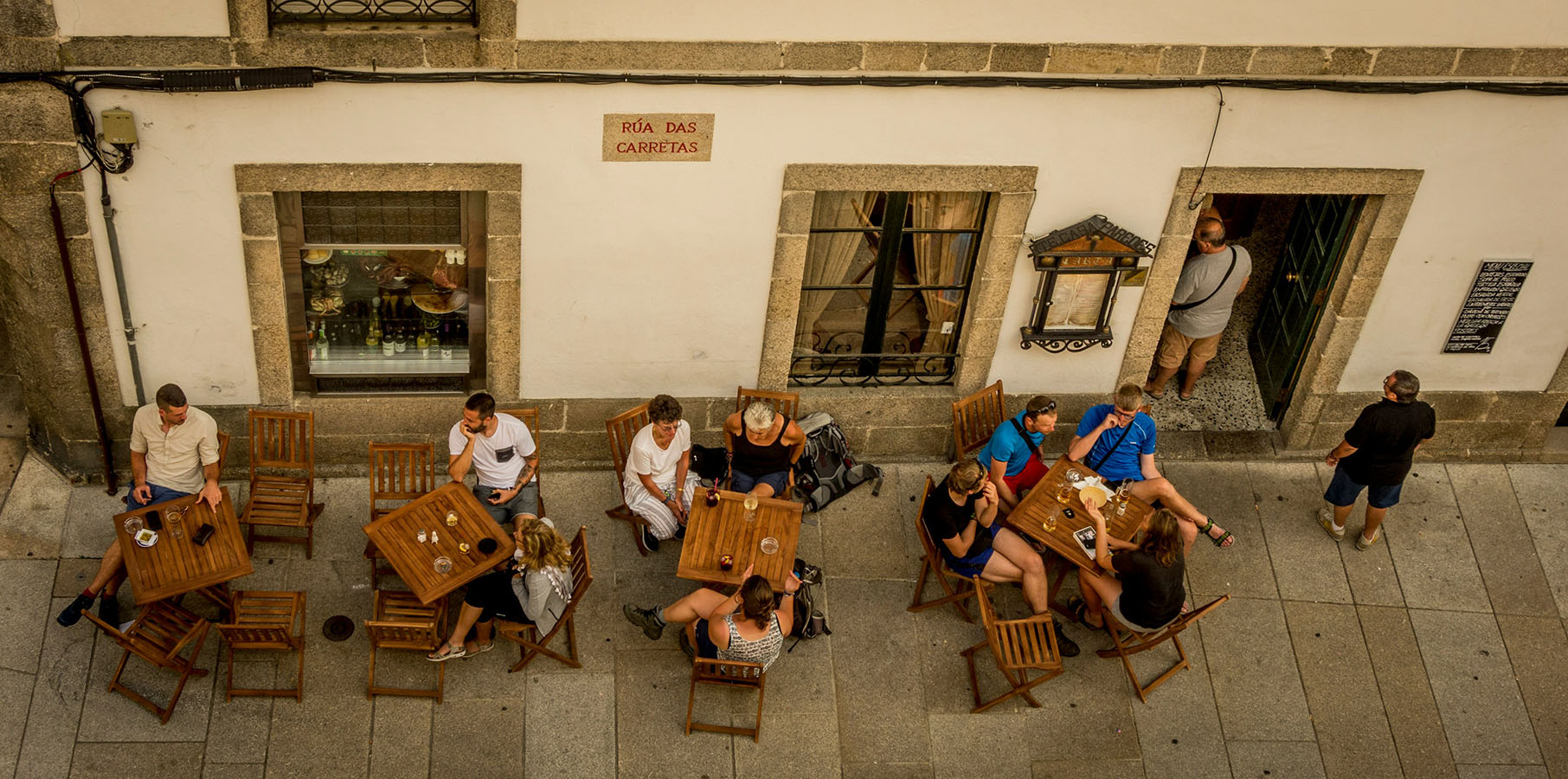
The past decade has seen the Oval Partnership create several landmark projects across Hong Kong, Macau and the Chinese mainland that embody our mission as a team of innovative placemakers. Many have been awarded, including at the recent Hong Kong Institute of Architects Awards, which complements the recognition we’ve received from our clients and, moreover, from the success of drawing visitors to the places we make.
Unique Approach
It’s a track record underpinned by several elements, not least Oval’s unique philosophy and approach in the way the studio integrates creativity, research and collaboration.
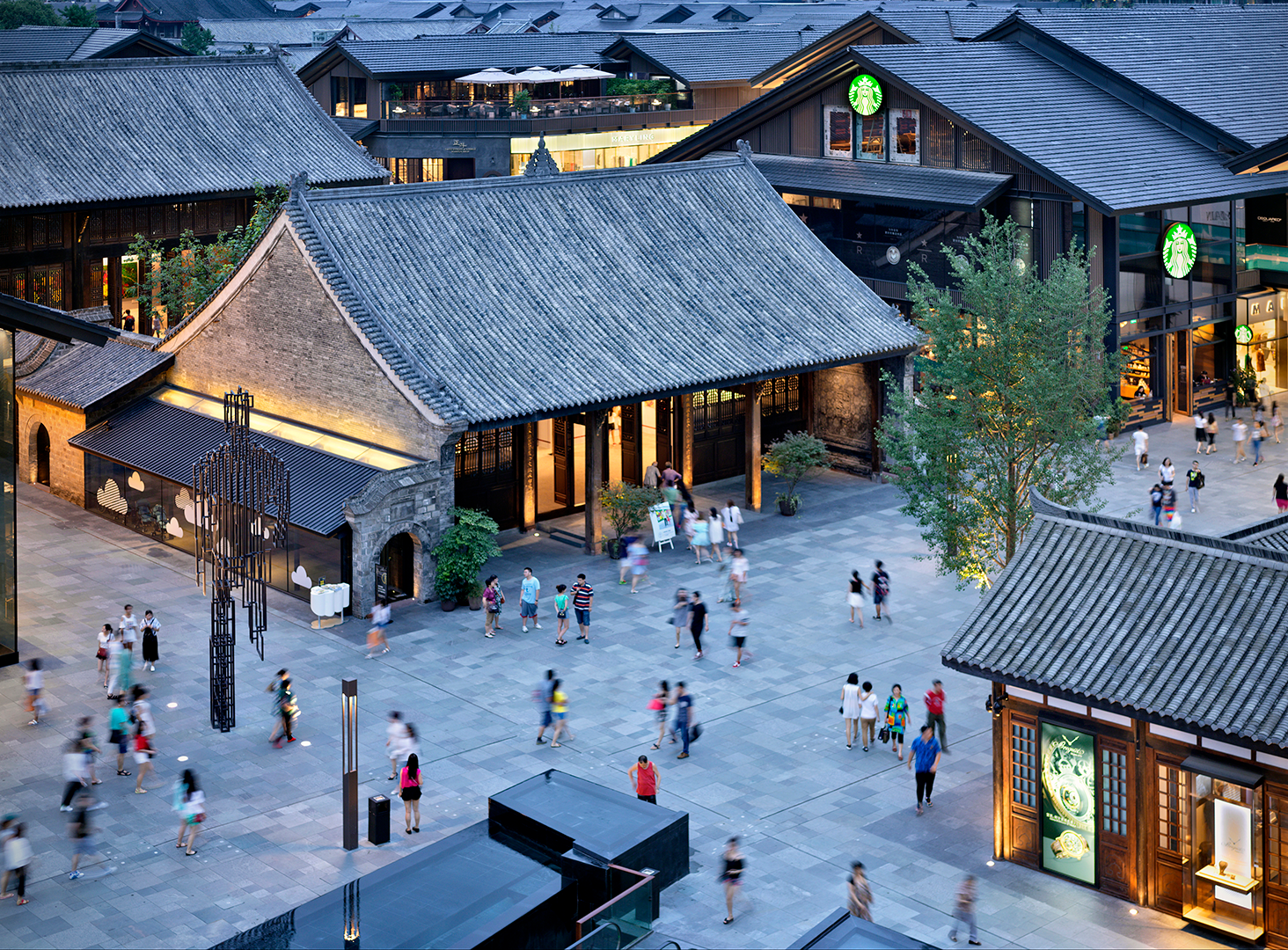
Taikoo li Chengdu is a strong example. The result of a seven-year design process, the project transformed a site containing the dilapidated thousand-year-old Daci Temple and six courtyard houses from the Ming and Qing dynasties. Our research in collaboration with Swire Properties showed how these could be integrated into a modern commercial district that celebrates the city’s rich history and its connections to figures from various eras and places. Since its opening in 2015, Taikoo Li Chengdu has become a perennial attraction, consistently drawing millions of visitors and shifting Chengdu’s urban gravity. It brings to fruition our vision of the Open City, even in a densely populated city.
But Taikoo Li Chengdu is far from the only heritage site that Oval has revitalised in collaboration with development clients and local authorities.
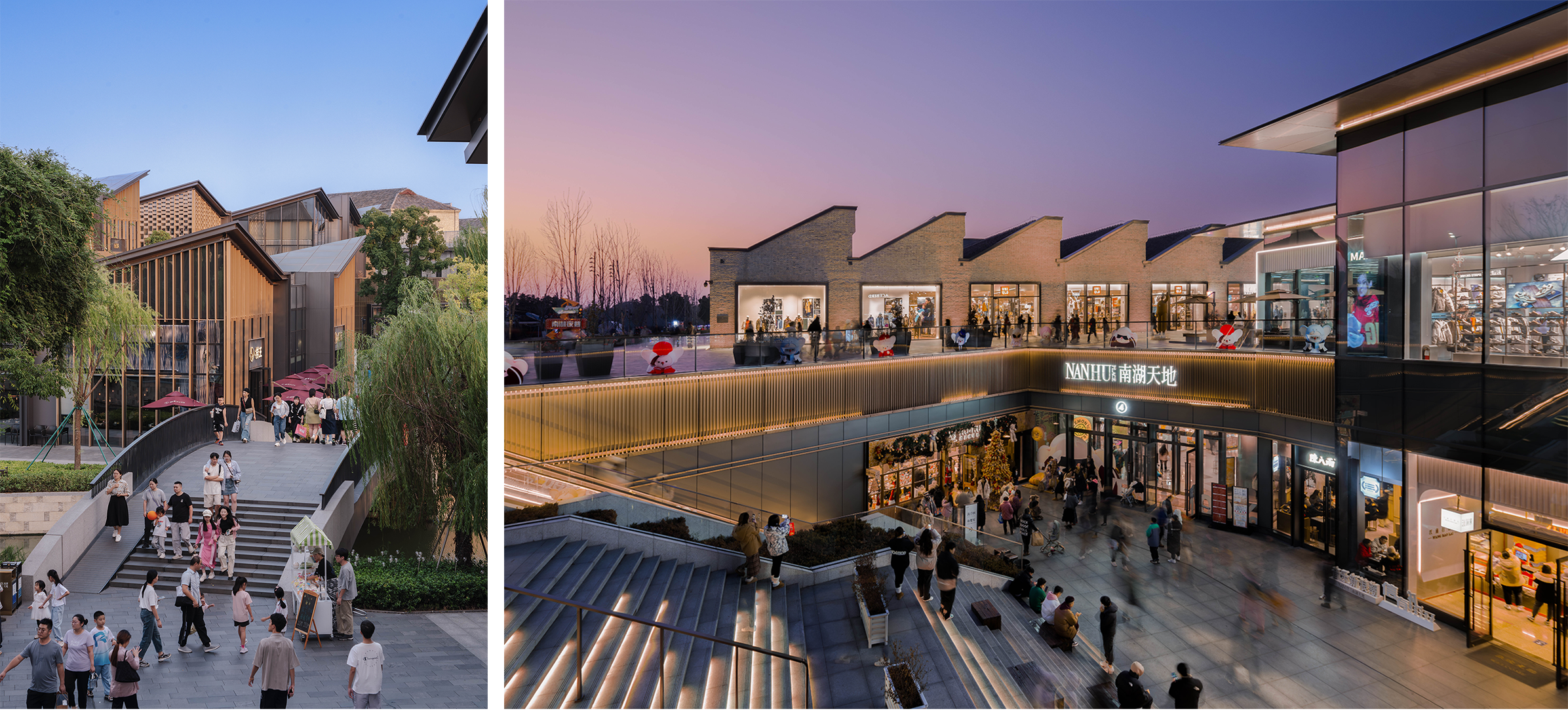
For Nanhu Place in Jiaxing, Oval created a master plan integrating ecology, industrial heritage, cultural context and micro-tourism elements, introducing the city’s residents and visitors to a new vision for urban living. The 210,000-square-metre project combines new commercial activities with five heritage buildings to foster a compelling dialogue between old and new that avoids the typical ‘demolish-and-rebuild’ model. The project also challenged the convention that landscaping is merely a supporting feature. By adopting an approach informed by symbiotic design, we integrated culture, commerce and tourism activities into the surrounding parkland, maximising the surrounding lake views. The immersive design incorporates local ecological features with the natural landscape, resulting in a space that promotes a recreational lifestyle and encourages people to visit and discover or rediscover the water town’s distinct charm.
These elements combine to create a modern urban cultural space that adds to the city’s fabric. Our approach was validated when Nanhu Place drew more than 420,000 visitors in its first two days alone, cementing its status as Jiaxing’s premier destination. In total, the space drew 7.85 million visitors in its first six months, a notable achievement for a city of its size and location.
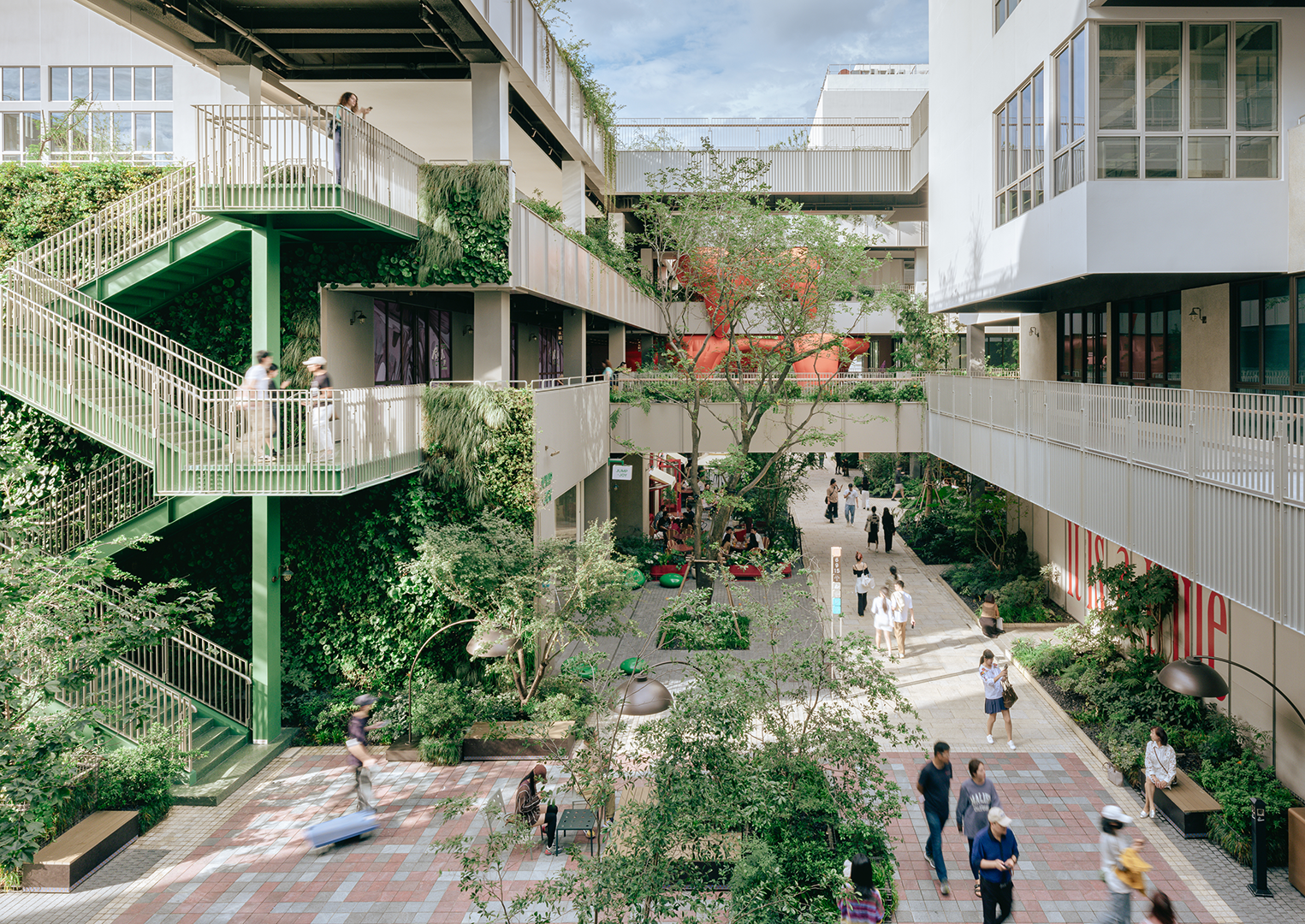
Similarly, Columbia Circle Phase II takes an innovative ‘adaptability renewal’ strategy to build on the 1920s-era architecture of Phase I. By respecting the authenticity of each era, it allows visions of ideal living across multiple generations of architecture to intertwine, enriching and transforming the urban narrative. We arranged the buildings at varying heights to create a rich, three-dimensional spatial rhythm. The area is fully open to the public, seamlessly integrating with Changning District’s ‘15-minute community life circle’ and the surrounding urban fabric. Streets, courtyards, plazas and other areas combine commercial, office, leisure, entertainment and cultural amenities, creating a multifunctional community hub.
Sustainability as Regenerative Design
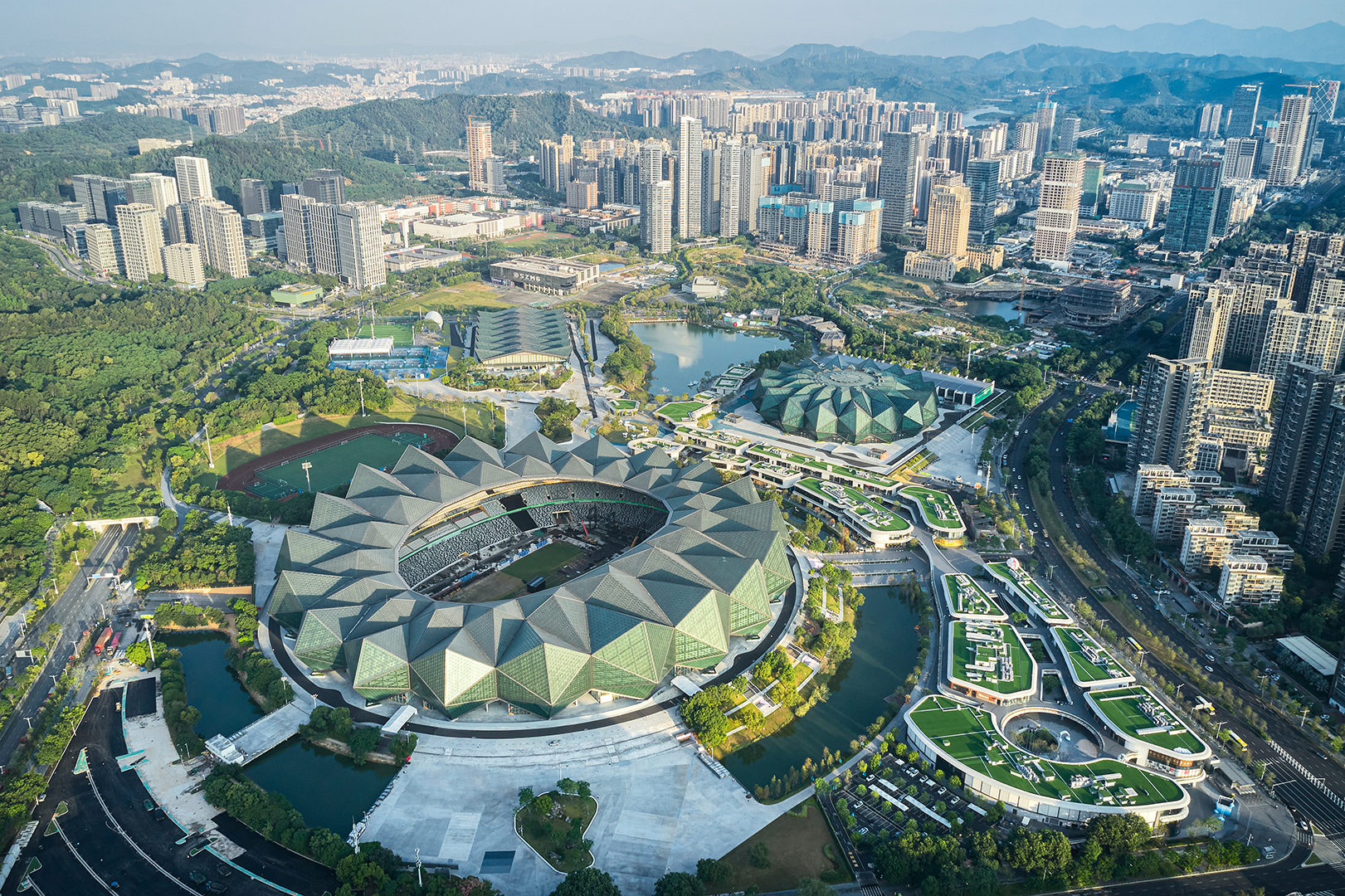
Sustainability, and going beyond to regenerative design for our cities, is another pillar of our work. One project that brings this to the fore is Shenzhen Universiade World, a 520,000-square-metre site in Longgang District that hosted the 2011 Summer Universiade and later fell into underutilisation. Oval worked closely with local and regional authorities on creating a highly permeable organic urban network, with the brief to repurpose the interstitial space between the built stadiums and otherwise sterile assembly ground into retail space integrated with a landscape to offer amenities to the neighbourhood including the university. We developed a model that was then untested on the Chinese mainland of integrating retail, art and community with leftover spaces in typically institutional stadiums.
Via this model, the project leverages the post-pandemic awareness in health and well-being into a retail park centred on wellness, participatory art, community and green infrastructure. Multifunctional zones include shopping streets, fitness parks, town squares, a waterfront promenade and ecological areas with lake views.
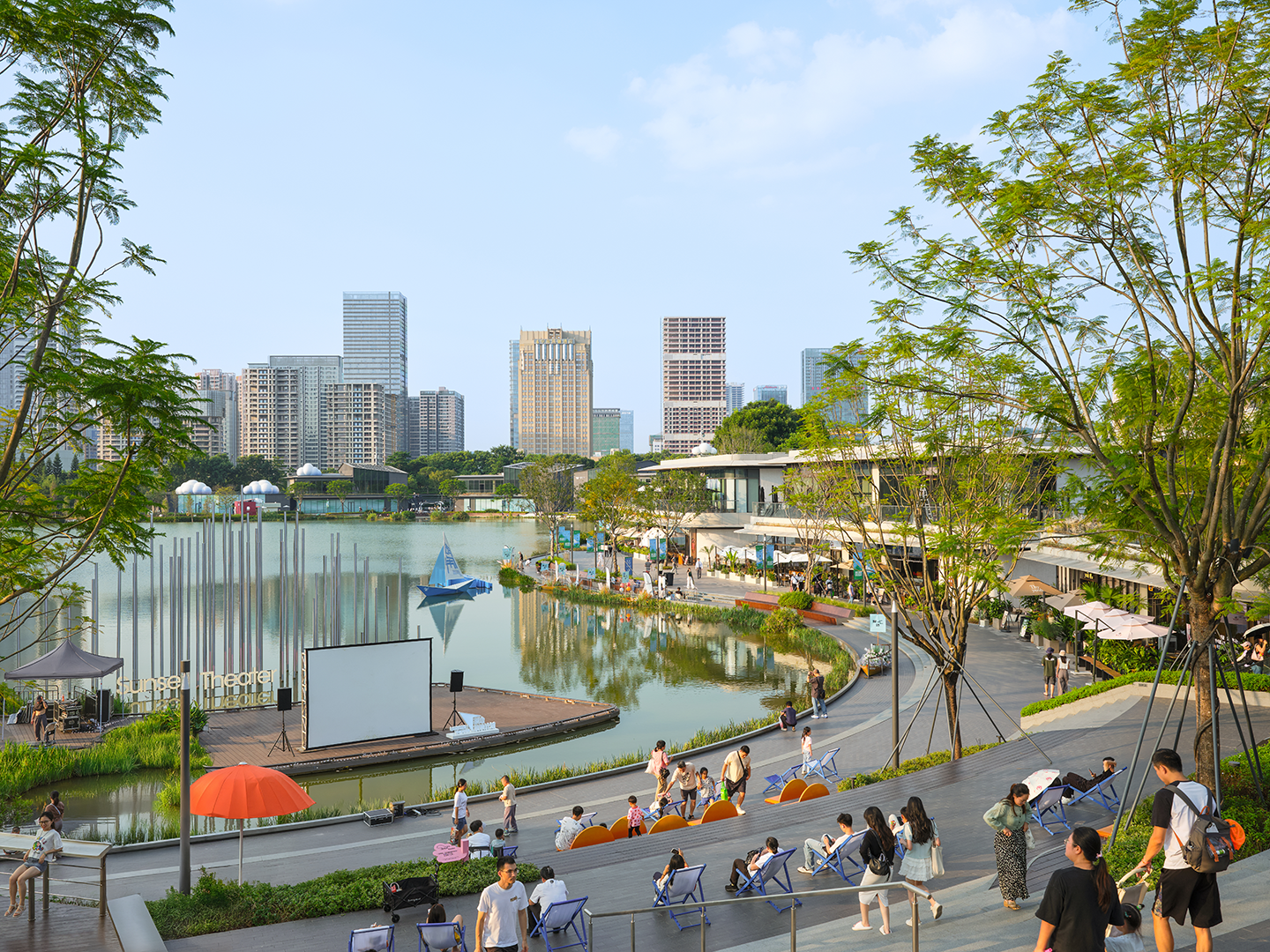
Sustainability was a focus throughout, with the project restoring and enhancing a derelict waterscape, adding green space and local flora conducive to biodiversity gain. The design incorporates multi-layered greening systems, which improve air quality, provide habitats for local wildlife and contribute to the overall ecological balance of the site. Adhering to ‘sponge city’ principles, the project integrates green roofs, concave green spaces and similar facilities to capture, infiltrate and store rainwater. Detailed catchment area mapping, runoff analysis and layouts of sponge facilities ensure that rainwater is effectively managed on-site, reducing runoff and contributing to groundwater replenishment. The project also preserves and restores the site’s original natural water bodies, with surrounding landscapes carefully managed using ecological slopes to ensure long-term protection and ecological stability. We also developed a water resource usage plans, and installed efficient energy systems.
At 1 Hotel Haitang Bay in Sanya, we used a passive design strategy to achieve our sustainability targets while creating an aesthetically pleasing, locally inspired environment.
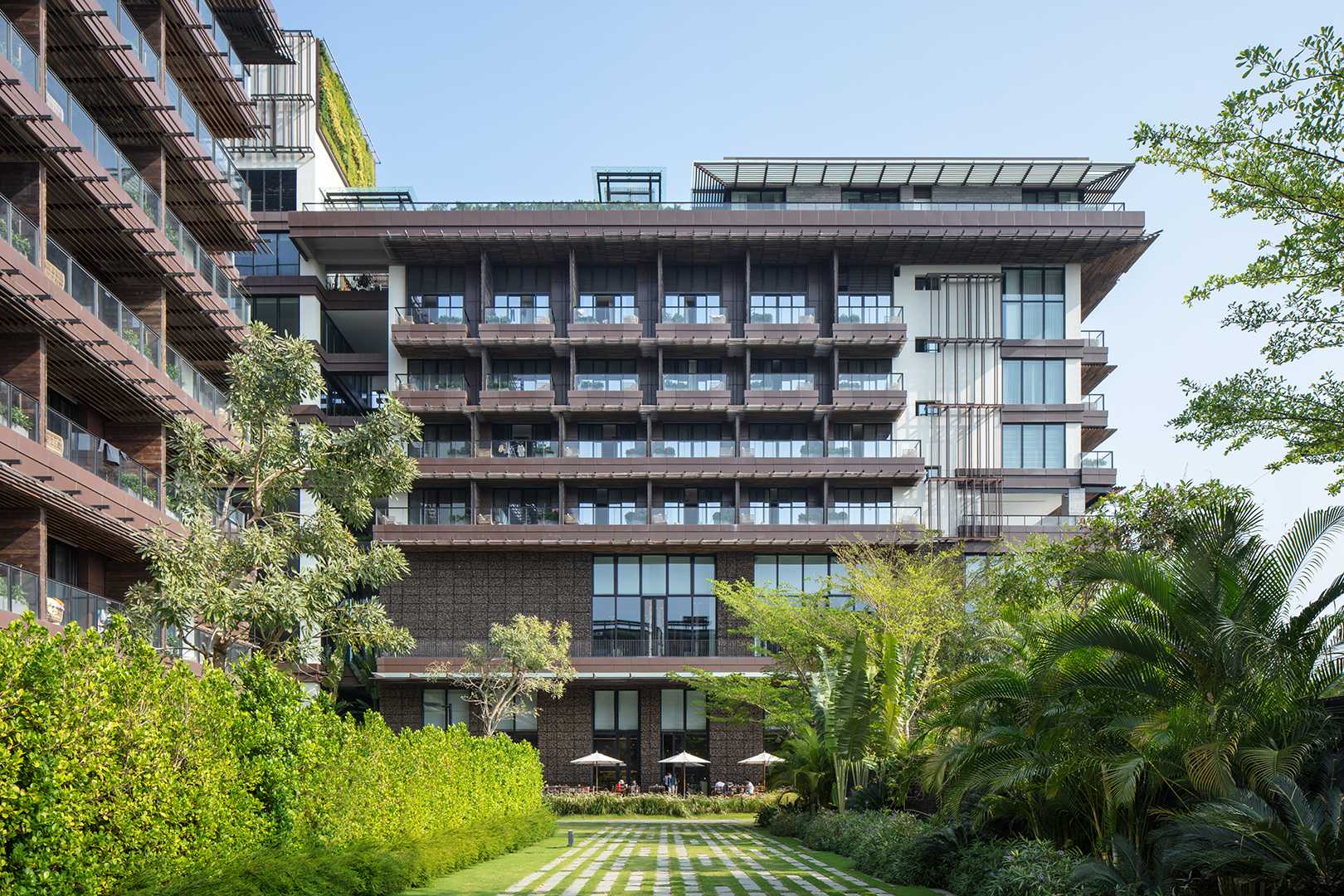
Here, that was applied to insulation, shading, ventilation, lighting and the use of natural materials. We used a ‘layering’ strategy, where screen-like materials create a ‘loose structure’ of layered spatial interfaces, forming walls that can be selectively penetrated by the wind, light, plants and views. Sun-shading metal mesh that reveals traces of time; ventilated wooden brick lattice screens; breathable stone gabion (a kind of metal basket or cage) walls filled with local volcanic lava stone; wooden lattice eaves; and permeable green walls. The layered design also addresses the different life cycles of materials and structures, easing maintenance and refurbishment. The materials for the layers come from sustainably managed forests and controlled sources.
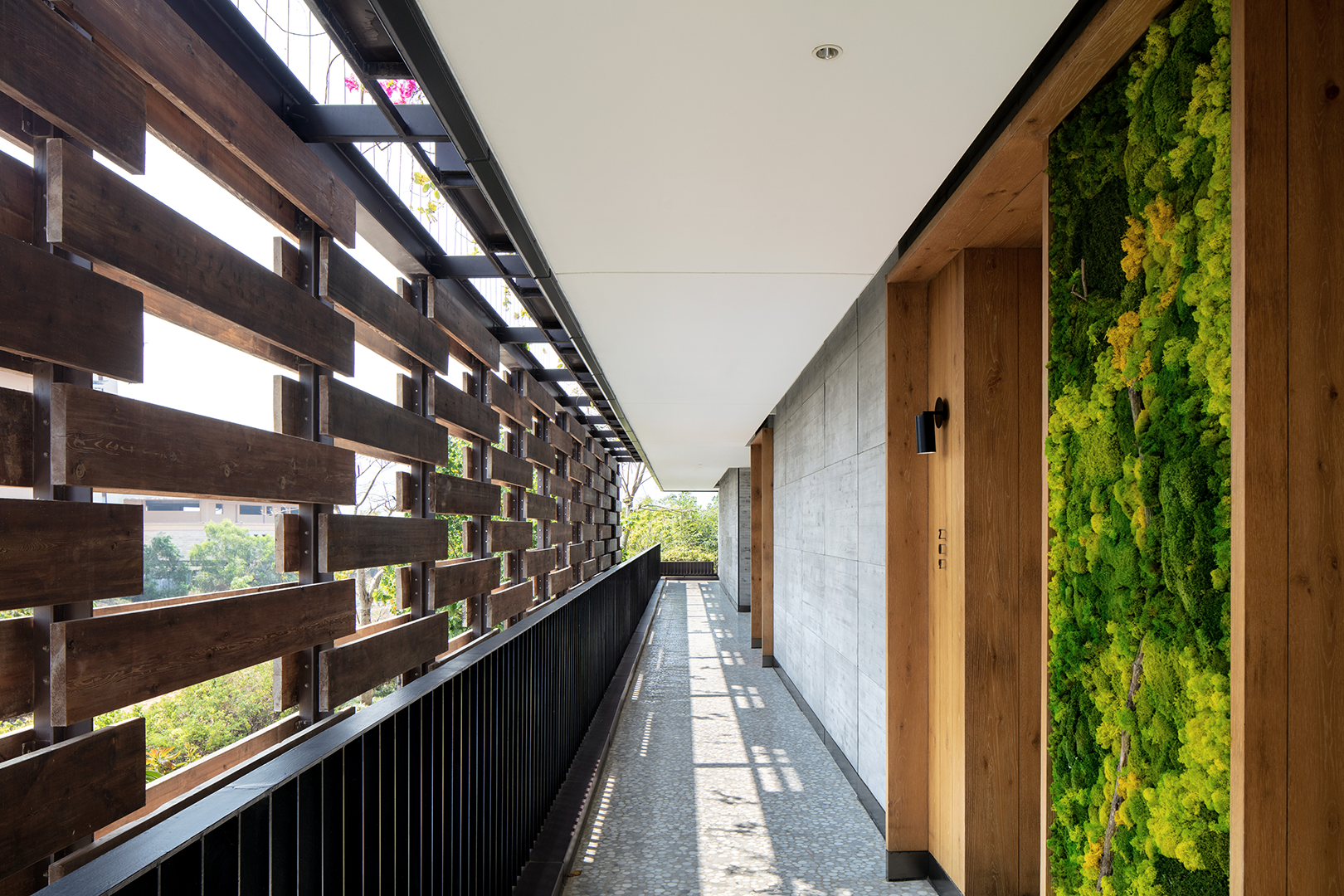
A green roof and gardens insulate the building and use rainwater. Local plants such as banyan trees and ferns are scattered throughout the courtyards, green walls and terraces, contributing to three-dimensional biodiversity and further enhancing heat retention, insulation and water retention capabilities. Greywater irrigation and solar thermal collectors complete the technological approach. Finally, a tropical farm of over 10,000 square metres provides seasonal organic produce and poultry to the hotel’s restaurant.
Human-Centric Placemaking
Of course, the approach to each project is human-centric, with the design teams prioritising lived experience, belonging and cultural resonance.
This was most recently on show at Macau M8, the redevelopment of the Macau Post Office Staff Quarters, originally built in 1963. The project prioritised sustainable innovation and urban renewal from inception, with the Macau government viewing it as a heritage-preserving cultural symbol.
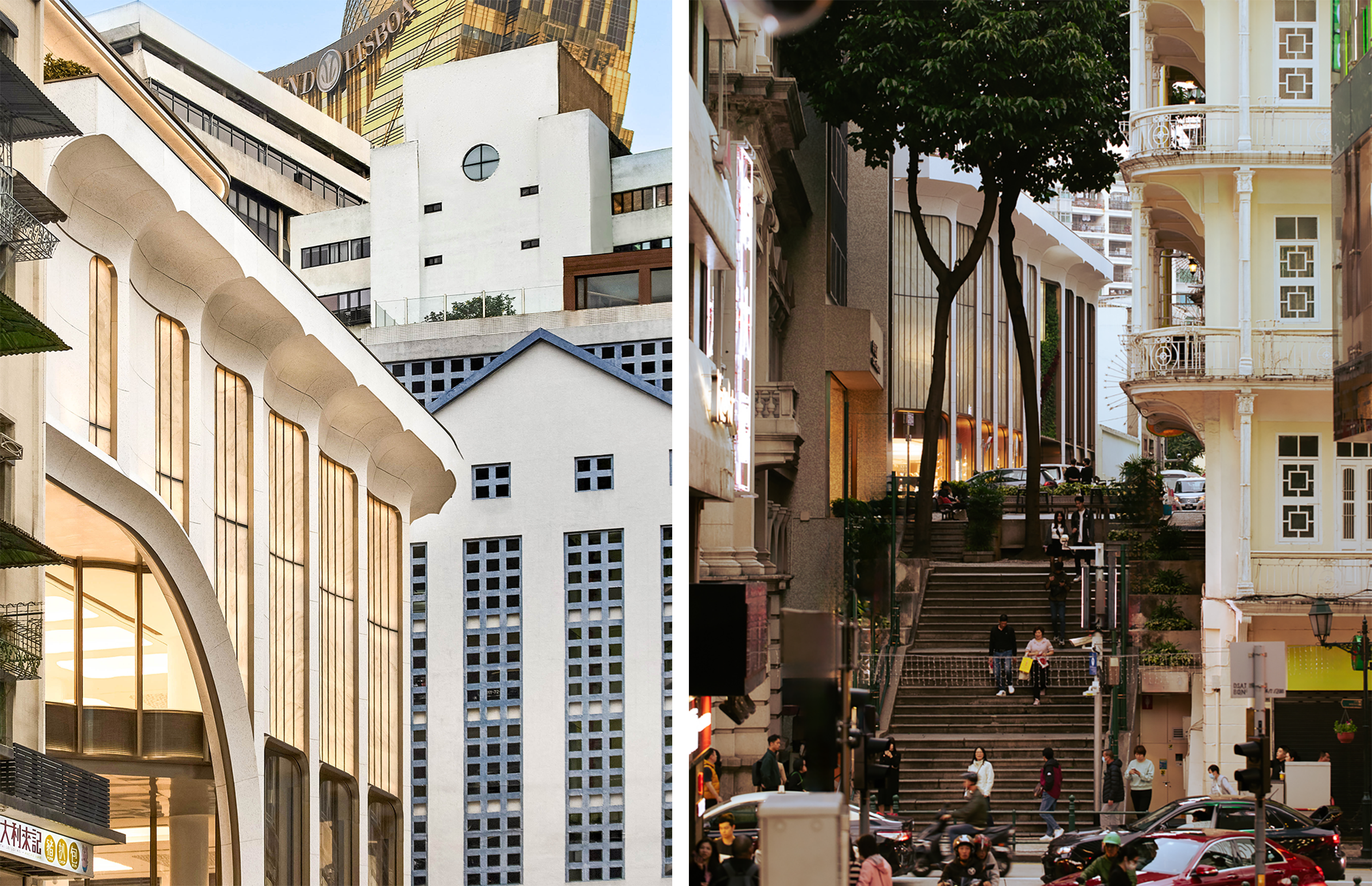
Our process created a universally accessible, welcoming space around a building that was formerly closed to the public. We integrated galleries, cafes and free space to cultivate social interaction, strengthening the city’s social fabric. The building’s retail dining offerings enrich the local cultural and commercial landscape, while the rooftop garden is accessible to all, and hosts murals that nod to the city’s unique history and traditions. We also prioritised accessibility for all visitors, with doorless entry, clear wayfinding and accessible bathroom facilities. In the evenings, serene luminescence provides a welcoming glow to the neighbourhood. In the brief time since its opening, Macau M8 has brough boosted tourism, community revitalisation through events and employment, and economic and cultural growth.
Private residential projects are also synonymous with human-centric placemaking. In Hong Kong, 42 Tung St in Sheung Wan comprises a single residential tower and a three-storey commercial podium that takes inspiration from the neighbourhood’s unique urban fabric.
The 23-storey development includes 13 boutique residential units (nine simplexes and four duplexes) above the podium. Each is served by an individual lift lobby, providing an exclusive sense of arrival and an extended entry experience. Architecturally, our concept draws on a traditional tong lau shophouse typology, which is the design language typical of the area. This manifests in a strong grid aesthetic, expressing columns and beams across a modular facade, creating a striking contemporary street frontage that remains harmonious with its surroundings. Similarly, the material and colour palette in low-key painted and modular tiled finishes with metalwork accents is in keeping with the local character.
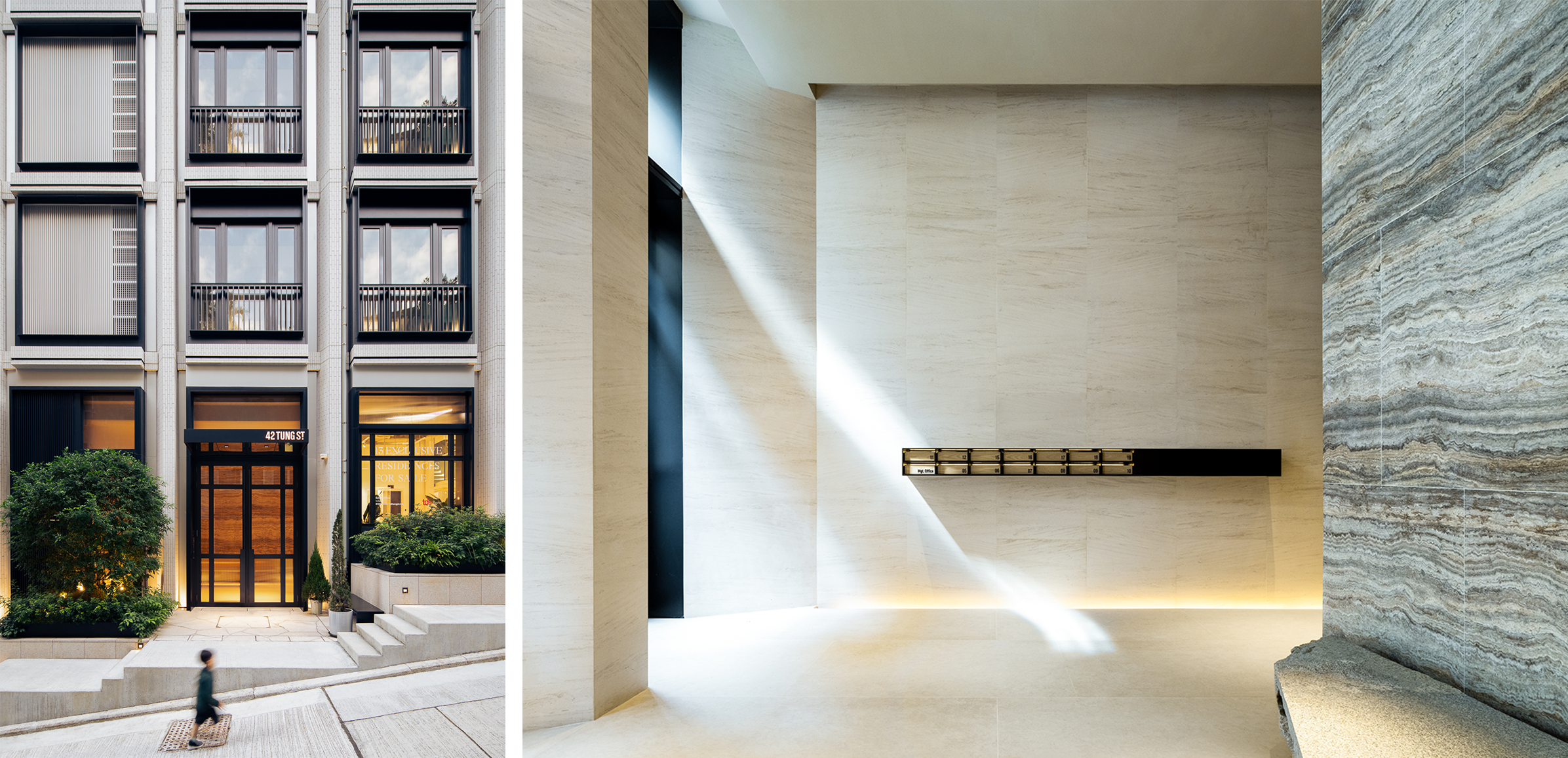
The street-level entrance integrates with the streetscape and stepped pavement design of the area, while within, the residential lobby and shop space activate the main facade to engage with pedestrians and the public. A landscaped area with the potential for al-fresco dining occupies a site set back from Tung Street, to enliven the streetscape and improve the urban environment.
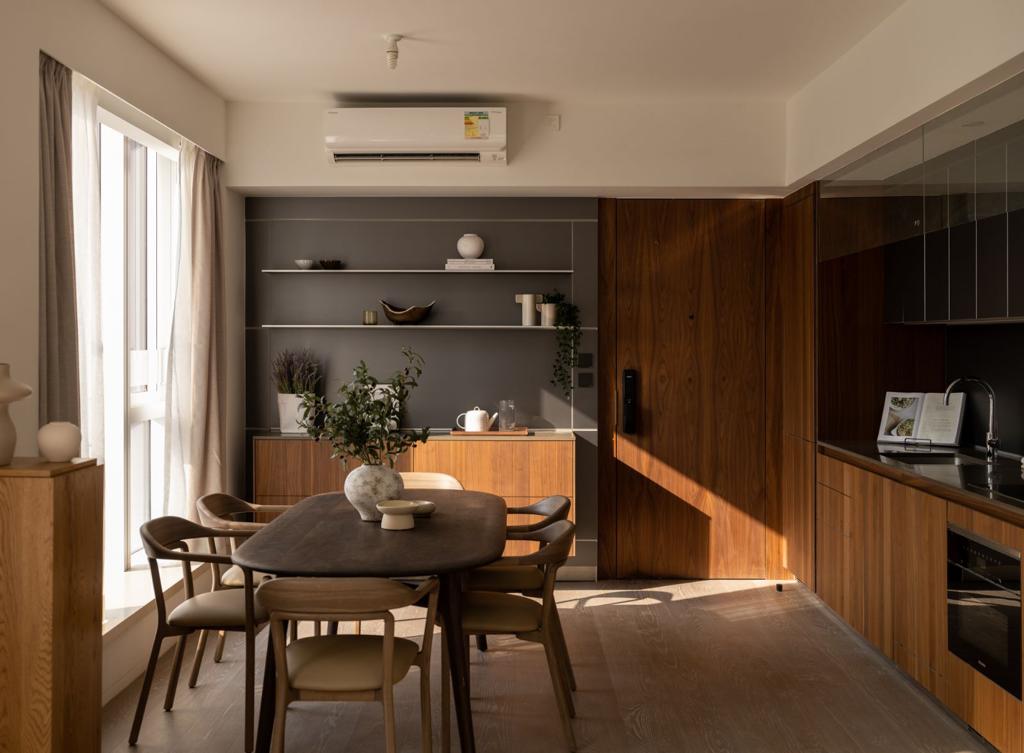
The interior continues this dark and light contrast, with a private lobby, kitchen, bathroom and clubhouse threaded together with a dark bronze accent in an otherwise light context of beige stone and desaturated wood. Inside and out, 42 Tung St promotes a sense of belonging.
Life-Place Transformation
Oval’s approach transforms locales into ‘life places’: where underutilised sites detract from the value and amenity of a city, Oval works with data on areas such as footfall, dwell time and community engagement to create vibrant destinations. Our key targets are walkability and evenly distributed places of interest.
We achieve this by starting with in-depth data analysis via a set of proprietary tools and processes based on digital placemaking (DPM). These tools and processes allow us to measure and improve footfall from project planning to post-completion, and to identify the diversity of uses that are vital for successful placemaking. We do this across scales from city to building, and encompass transport, land use, urban planning context, public space & street design, spatial networks and existing public realm activity. Through DPM, we can unlock hidden potential to create thriving spaces for people and returns for investors.
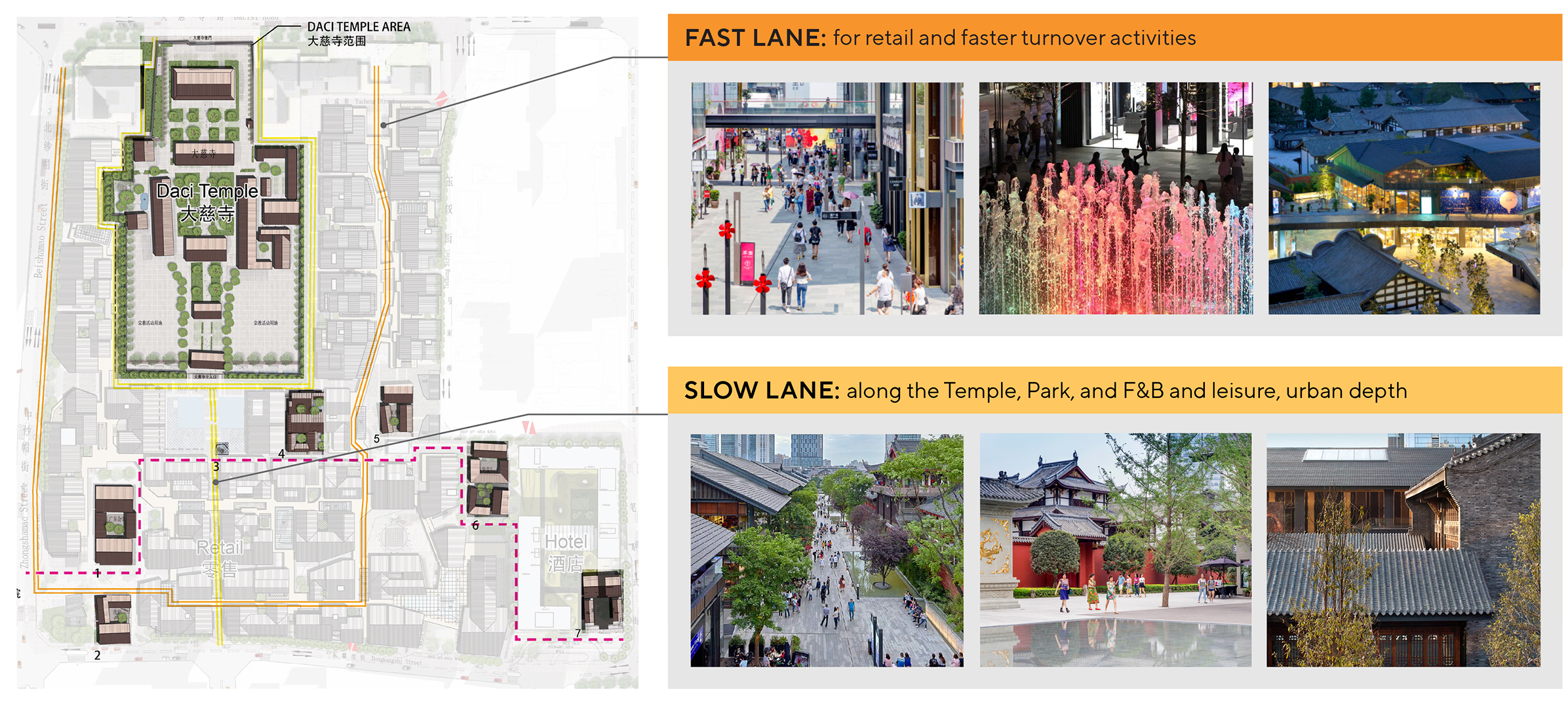
At Taikoo Li Chengdu, we used DPM to analyse the horizontal and vertical connectivity, as well as places of interest nearby. Beginning with this analysis, we redefined this historical neighbourhood as the new downtown district — a place that celebrates the historic character of the city while offering immersion in a sustainable, authentic and contemporary urban experience. This is how the project has pulled the city’s centre into its orbit through its drawing power.
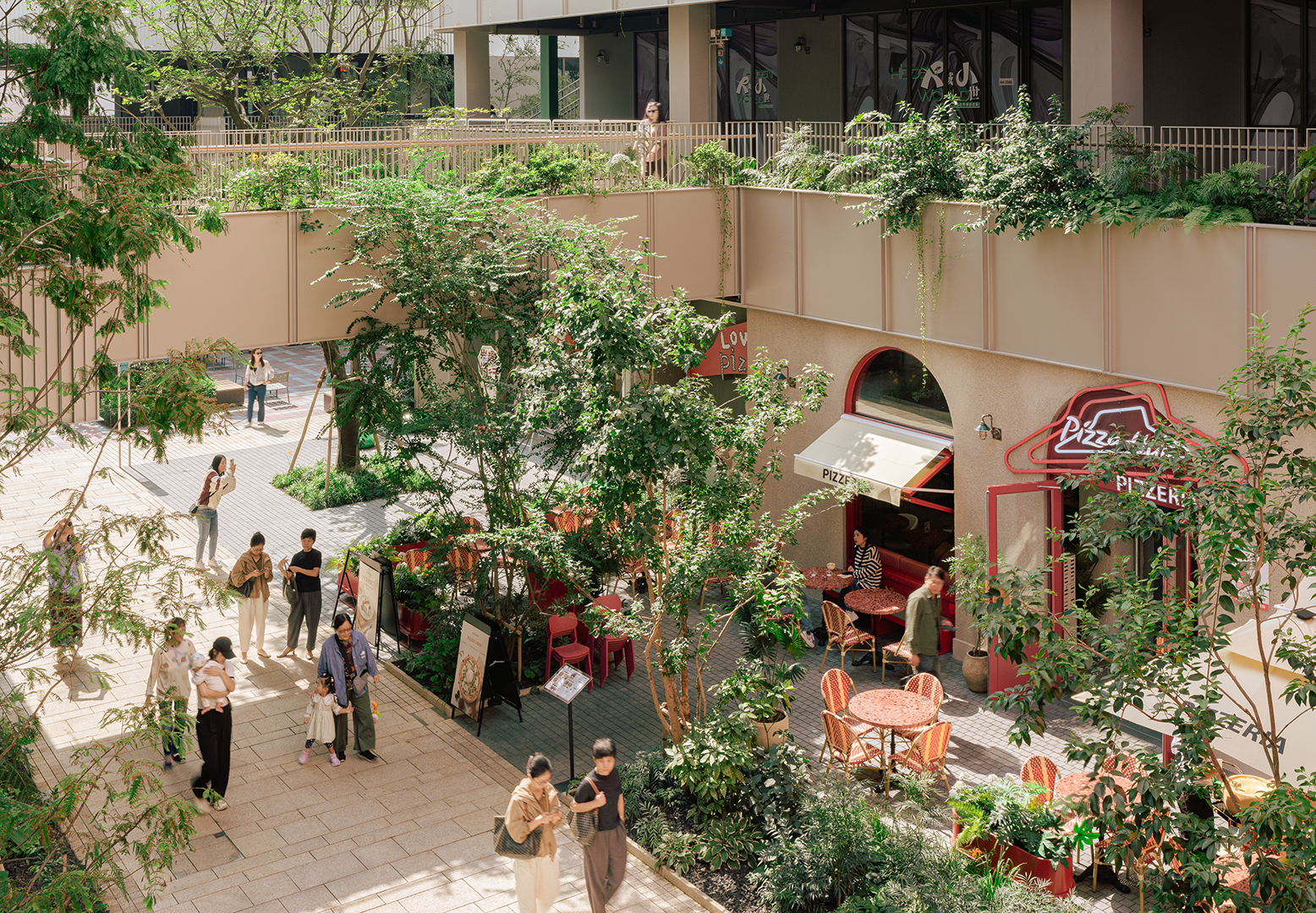
At Columbia Circle Phase II. our placemaking was based around research into key user profiles, their most common activities and what they needed from the space. Using this, we created the project around spaces including green spaces, civic squares, play areas, sports parks, leisure corridors and cultural galleries. The spaces are interwoven and integrated for optimal walkability, discovery and visitor experience.
These themes define Oval’s DNA: we create places for people that are sustainable both in environmentally as well as enduring in their cultural and economic vitality.