More than a place to buy coffee
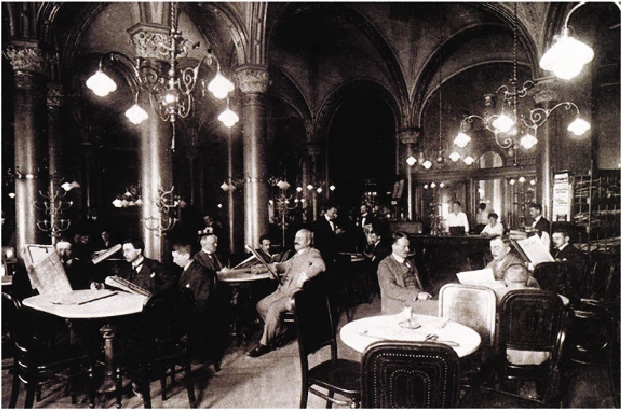
Cafés have long served as places of conversation, exchange and everyday life. In the European café tradition, they were settings for intellectual debate, reading and informal encounter as much as for drinking coffee. Today, we still think of the local café as a classic "third place" – somewhere apart from home and work where people gather, linger, and settle into the small routines of neighbourhood life.
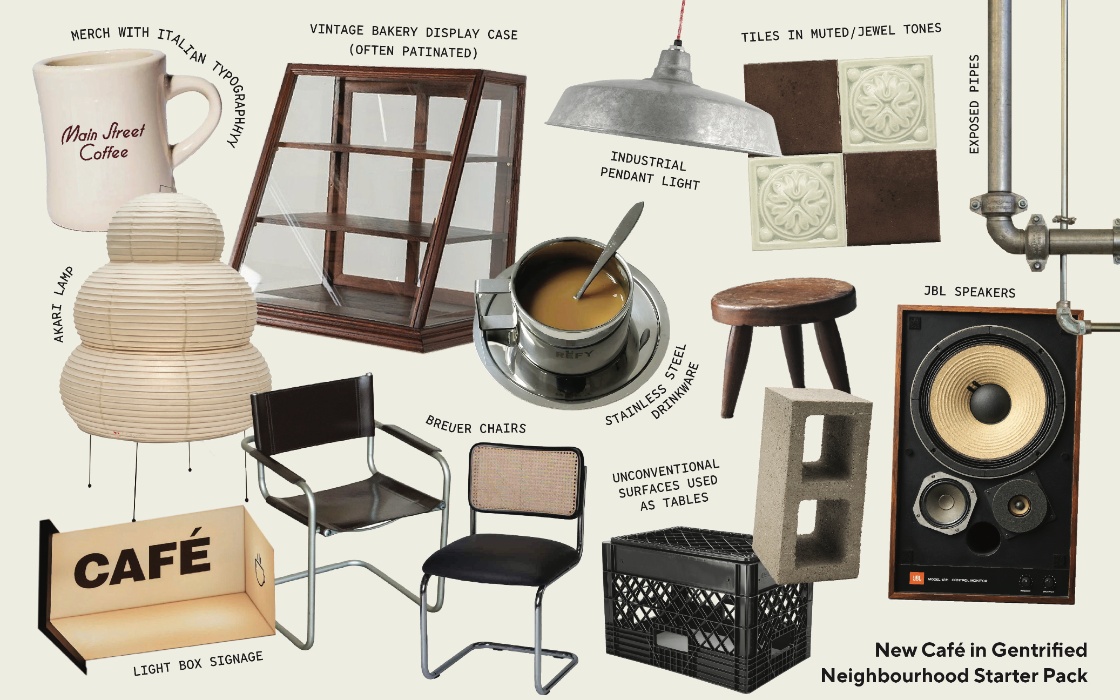
Yet while the café remains a social fixture, its aesthetic has become increasingly standardised. The result can feel performative, but detached from the specificity of a place. When the environment becomes a product for visual consumption, what emerges is a new kind of placemaking – one that stages the appearance of local life without being deeply shaped by it. Aesthetics converge, and everywhere begins to look the same.
The café as interface
In The Generic City, the architect Rem Koolhaas writes: “Convergence is possible only at the price of shedding identity.” When café owners see the same success patterns repeated across businesses – images that perform well, interiors that photograph neatly, trends that gain traction online – the incentives align. Social media rewards visual consistency, and aesthetics that fall outside those norms are often punished.
This has consequences for placemaking. Third places thrive on slow development: relationships, routines, gradual familiarity. Social media logic works differently. Homogenised aesthetics are often a byproduct of short design cycles, shaped by what can be implemented quickly and updated easily to keep pace with shifting visual trends. The space becomes optimised for attention rather than long-term belonging. Over time, the uniqueness of the neighbourhood café gives way to a shared visual dialect. The environment itself begins to feel familiar before it ever feels local.
From third place to non-place
In that sense, some contemporary begin to resemble what the French anthropologist Marc Augé called the ‘non-place’: an interchangeable space marked by transience rather than attachment. Like airports and motorway service stations, such spaces do not accumulate local memory in any meaningful way. They process people rather than community members. People pass through.
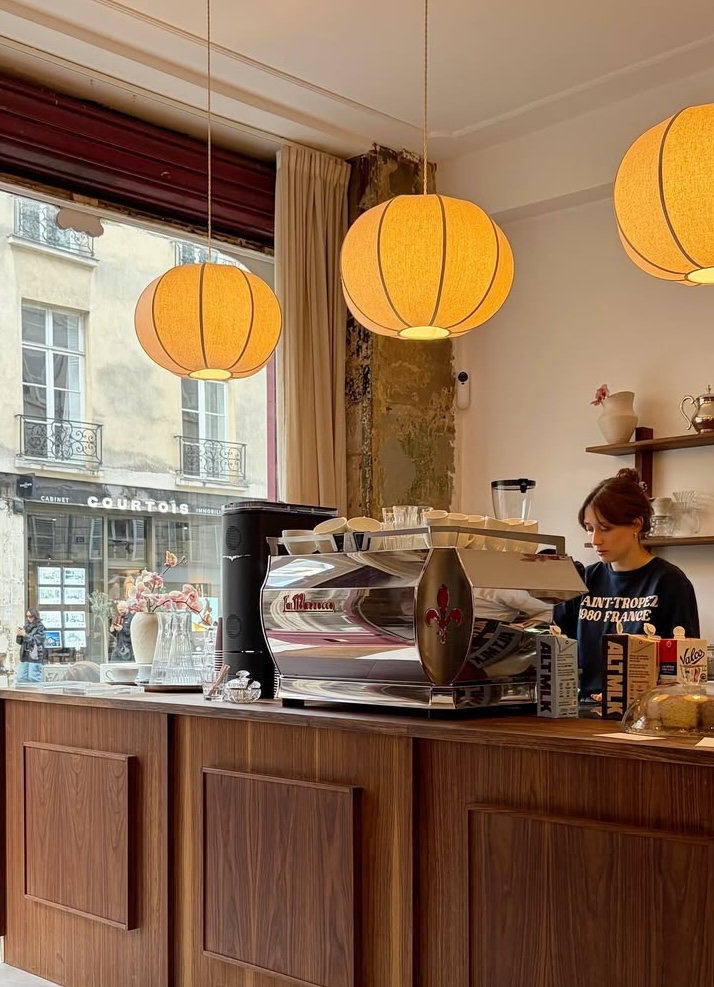
A café space can be warm, busy and visually appealing while still function as a non-place if it lacks genuine identity, historical depth and lasting ties to its community. That is the tension at the heart of many contemporary café interiors: they are carefully designed to feel welcoming, yet often remain detached from the neighbourhoods in which they sit.
A perpetual present
The homogenised coffee shop is also far from what the British cultural theorist Mark Fisher described as a place “stained by time”. It offers not the thrill of temporal dislocation, but a bland comfort of a perpetual present: a seamless, unchanging now that feels simultaneously like last year and tomorrow.
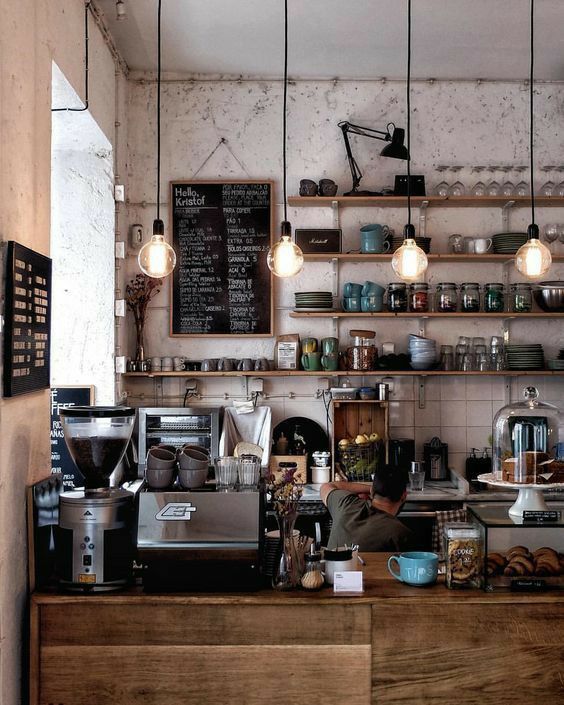
Its design actively resists ageing. One could argue that café aesthetics have changed over the past decade – that exposed brickwork and Edison bulbs have given way to quirky tiled walls and Noguchi lamps. But that is largely a surface shift. The structural logic remains the same. What looks like stylistic evolution is often just aesthetic substitution without deeper transformation.
Fisher’s point is useful here. Non-places do not simply lack local identity; they also become temporally indeterminate. Stripped of the textures through which time clings to architecture, they also lose historical depth. The café invites you to inhabit the present as a generic atmosphere, not as a moment that carries local memory, friction or unfinished business.
What is lost when every café feels familiar
When cafés slide into non-place territory, our relationship to them changes in significant ways. You may feel that you have already been here in another city – not because it is part of a chain, but because the aesthetic template is so familiar that each space echoes the last. You may also find that your experience feels detached from any specific neighbourhood history: you are having coffee near a place, not inside its ongoing story.
Café homogenisation threatens not only the distinctiveness of places, but also the texture of time those places allow us to feel. These carefully curated spaces risk becoming interchangeable backdrops – pleasant, profitable, and socially thin.
Designing for belonging, not just visibility
The challenge, then, is to create cafés that remain welcoming without becoming endlessly copyable: spaces that offer comfort while still belonging unmistakably to the places they claim to serve. A genuine third place must do two things at once: it must support social connection, and it must generate place-based identity. It should carry the distinctiveness that turns mere space into lived, remembered and inhabited experience.
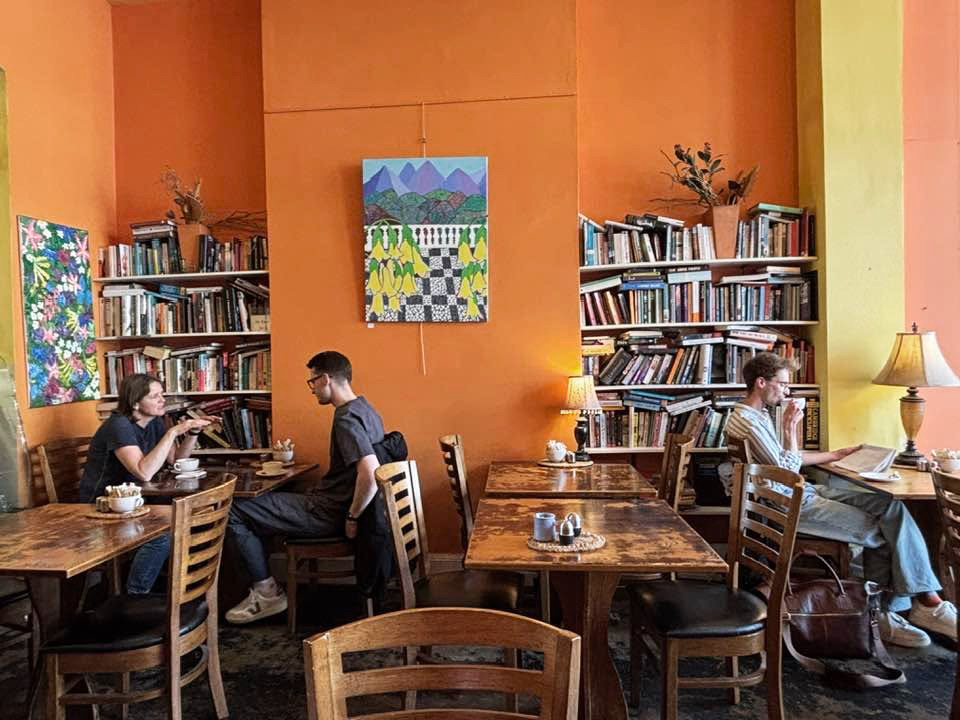
This has implications beyond interior style. Design can express local ethos, but the social life of a café matters too. If community engagement exists only at the level of branding or online performance, the claim to local belonging will remain thin.
Without that distinctiveness, the coffee shop risks becoming a kind of banal purgatory – a frictionless nowhere that is neither here nor there, neither old nor new, suspended in a perpetual present that offers the hollow comfort of familiarity without the grounding of genuine place. The task is to resist the assumption that globally legible comfort must come at the cost of local identity, so that third places remain truly places, not simply curated environments waiting to be ranked, photographed and replicated.