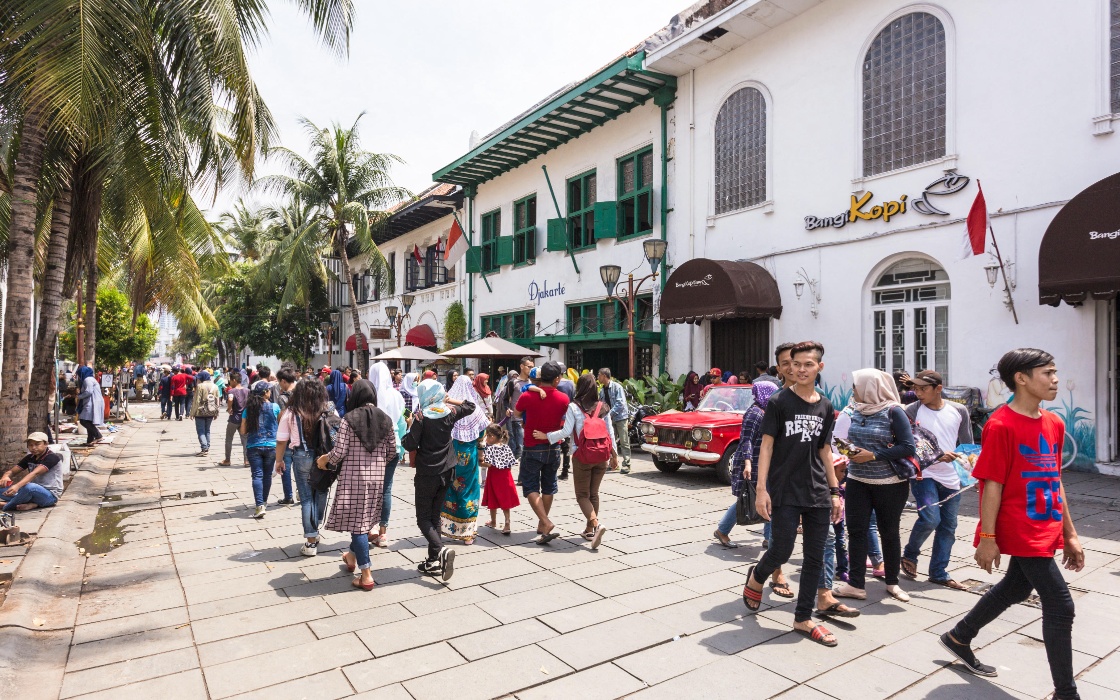
Jakarta’s Kota Tua (‘Old Town’) neighbourhood is home to many Dutch colonial structures, some dating back to the 17th century
In the narrow lanes of Jakarta’s Kota Tua, a new four-storey building stands by the Ciliwung River. Its corridors are open, its ground-floor shops alive with chatter, and a small archaeology gallery occupies the space where fragments of old Batavia once surfaced. For many passers-by, it looks like just another government housing block. For the 33 families who live there, it’s a home reclaimed. This is Kampung Susun Kunir, the result of a years-long struggle by residents, activists and architects to prove that urban renewal can happen without erasing the people who give a city its life.
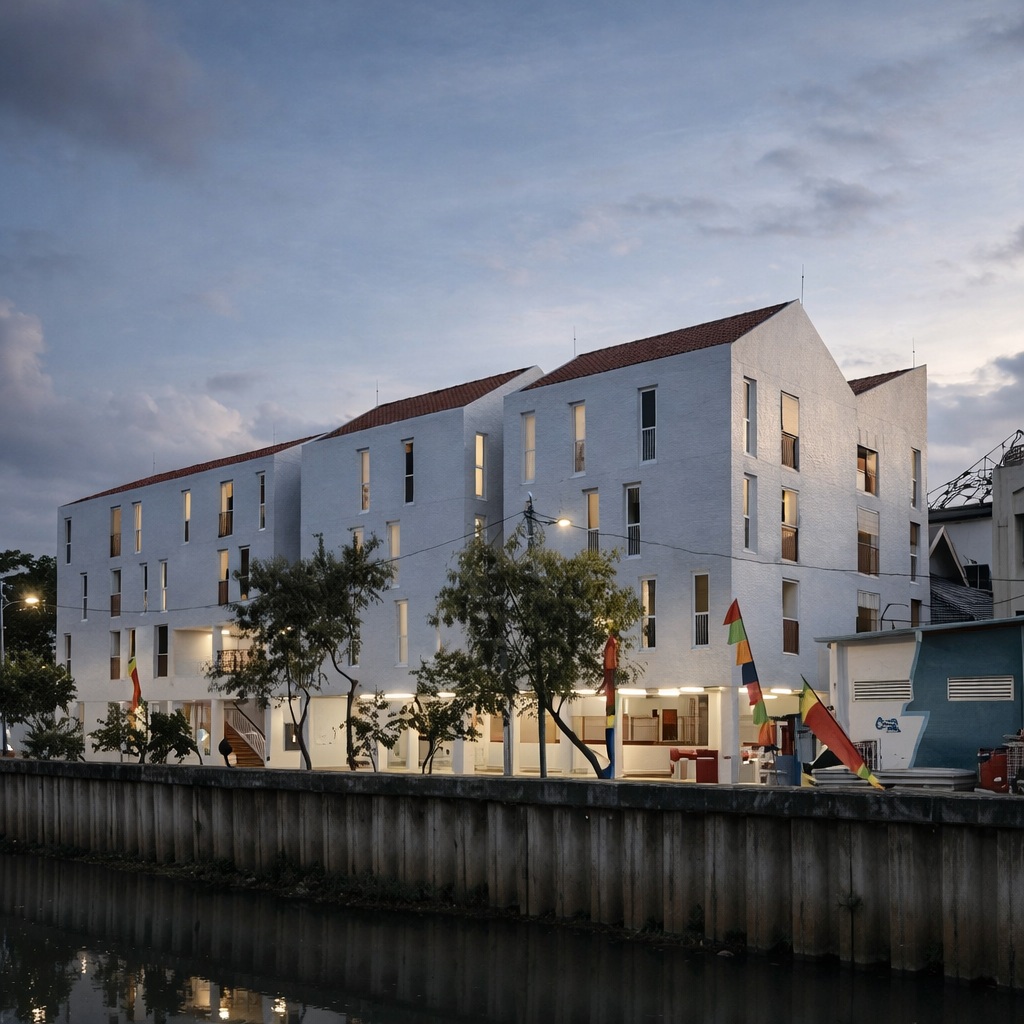
Kampung Kunir’s story began in 1979, when two locals settled on an empty patch and others followed. For decades, the area thrived in the shade of fruit trees. Then in 2015, bulldozers arrived to clear the settlement for a riverside road project. Some residents attempted to return via a temporary occupation and everyday activities. But in 2016, the area was cleared again, removing these remaining traces. Seventy-seven families were evicted; most scattered to public housing blocks or returned to their hometowns. But a few refused to give up. Week after week, they came back to the ruins to hold arisan savings circles and trading sessions, quiet acts of defiance that kept the social fabric of Kunir intact.
Their persistence found an ally in the Jaringan Rakyat Miskin Kota (‘Urban Poor Network’), which during the 2017 gubernatorial race negotiated a moratorium on evictions with candidate Anies Baswedan. That opened the door for a different kind of rebuilding, one driven by the community with guidance from the Indonesia chapter of Architecture Sans Frontieres and architect Kamil Muhammad, co-founder of the chapter and director of pppooolll.
Muhammad and his peers saw their role not as designers dictating form, but as pendamping, companions who translated residents’ everyday practices into drawings, policies and, eventually, walls. ‘Project briefs weren’t written,’ recalls Muhammad. ‘They were accumulated.’ Workshops replaced blueprints. Residents redrew their vanished kampong from memory, recalling house facades through the trees that once shaded them. The drawings became a map of emotion as much as space, each fruit tree and alley telling a story of belonging.
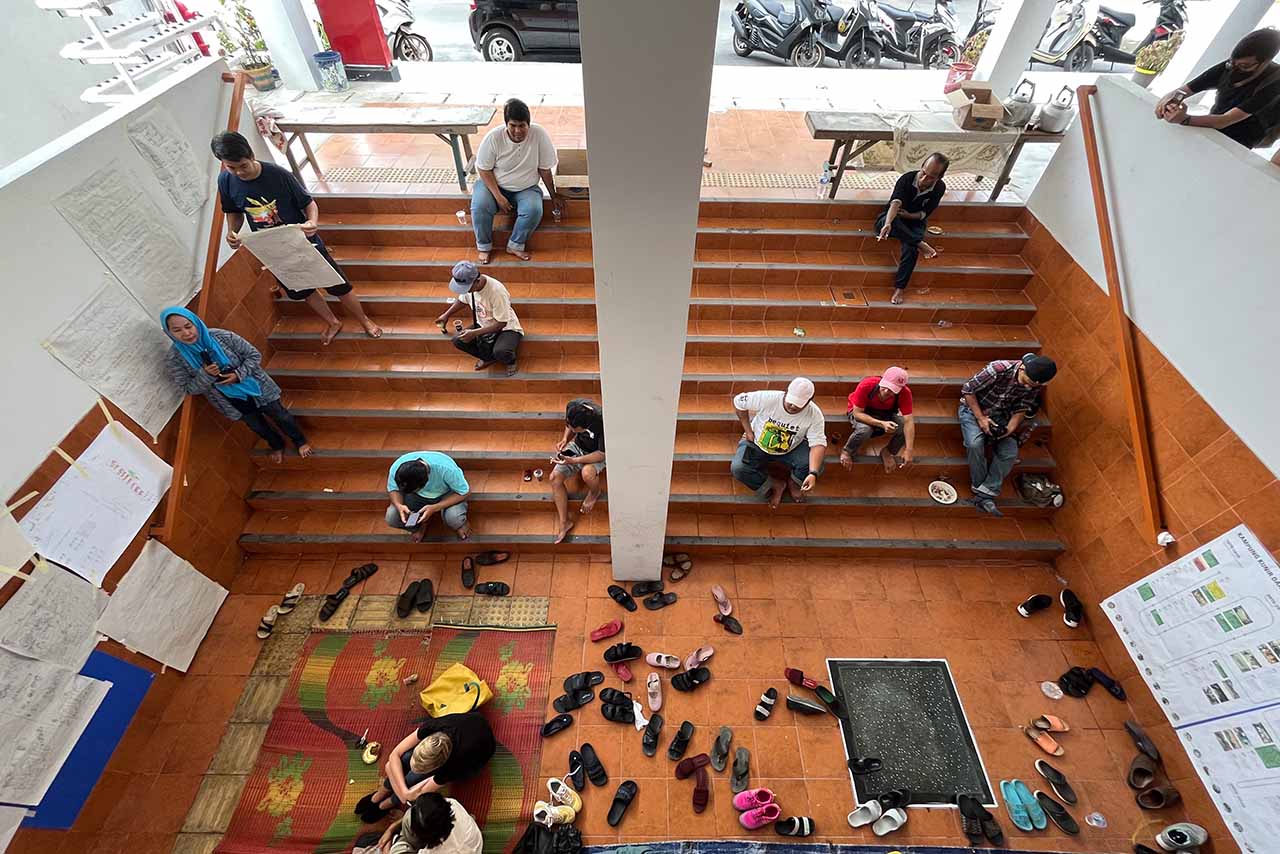
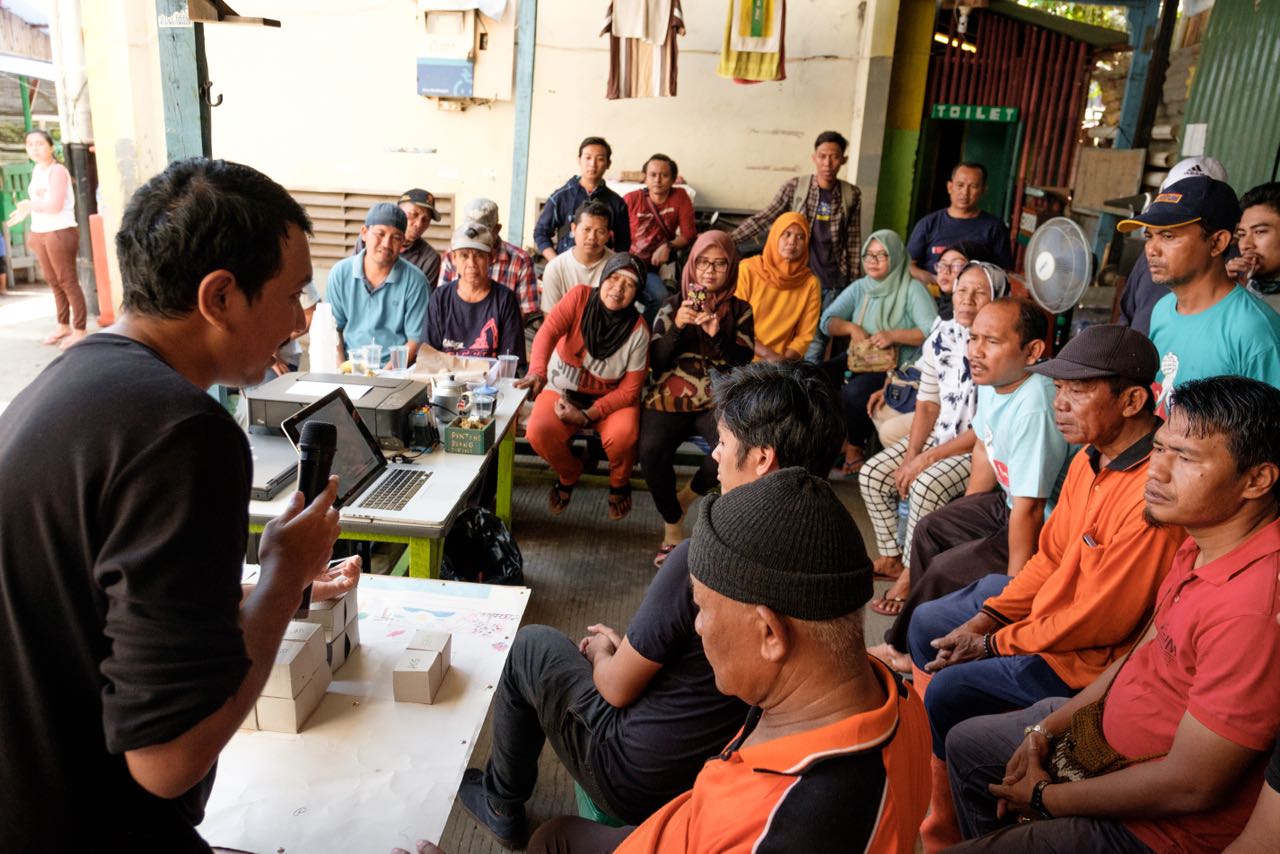
The exercise evolved into the design of new units. On Saturday mornings after market hours, families sketched where they cooked, prayed or sold snacks, and architects turned these sketches into plans. In the process, residents learnt to express their needs visually, architects learnt to listen and both learnt to trust.
Yet rebuilding Kunir was not only a matter of design. Its location placed it within a heritage regulation framework that often privileges colonial remains over living communities. Before construction could begin, an archaeological excavation was required on the assumption that the site contained remnants of Batavia. The excavation did reveal traces associated with the colonial past as well as those of Kunir residents. The discovery complicated the official narrative of ‘heritage’. The site was indeed a repository of colonial history, but also of more recent, now erased, lives: overlapping layers of occupation, each with its own claim to the land. For the residents, this realisation sharpened an existing sentiment, captured in the remark ‘as if we were still colonised’.
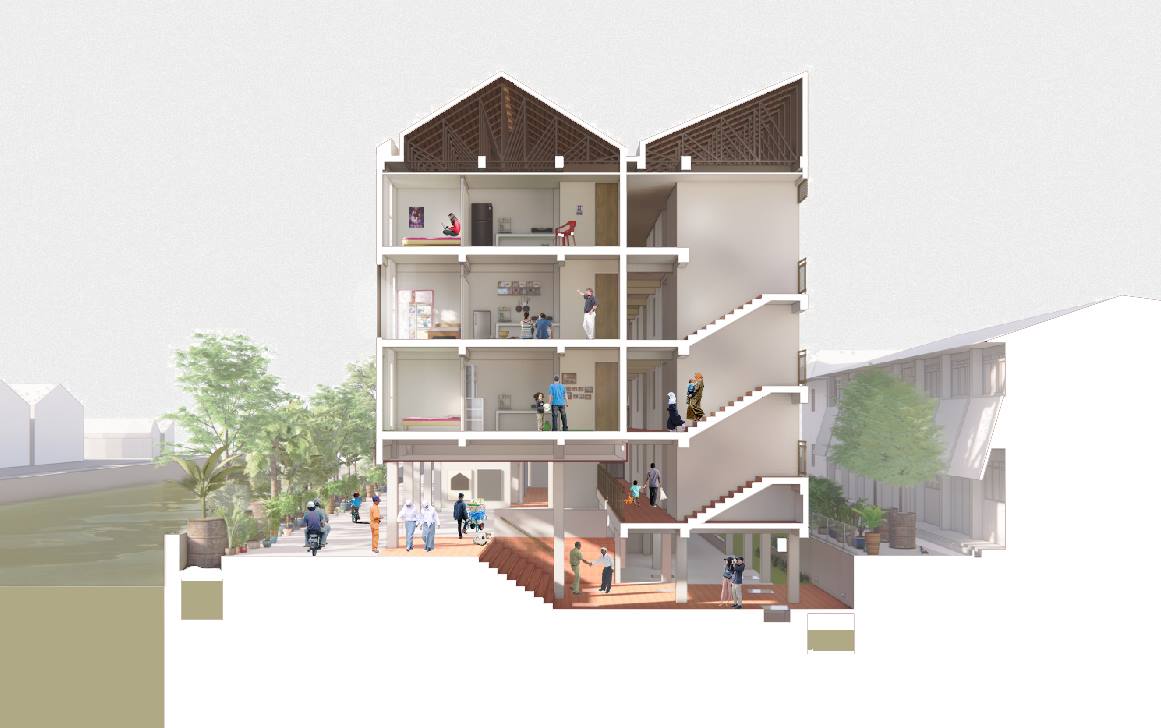
After years of paperwork, lobbying and redesign, Kampung Susun Kunir finally rose on its original site in 2022. The cooperative that had once organised protests now manages the building: its schedule, finances and future. The design translates kampong life into vertical form: semi-open corridors double as shared living rooms, older residents occupy the lower floors, and laundry and conversation spill naturally into the air. The archaeology gallery below grounds the building, literally, in its past.
The result, while modest, is radical. It challenges Jakarta’s pattern of development by displacement, showing that participatory design can align with state standards without losing its soul. For the government’s housing agency, accustomed to template-based planning, the process was slow and uneasy. Weekly meetings between staff and kampong representatives often stretched late into the evening, with Muhammad acting as mediator between legal codes and lived experience. Yet those negotiations produced more than a building — they forged a precedent.