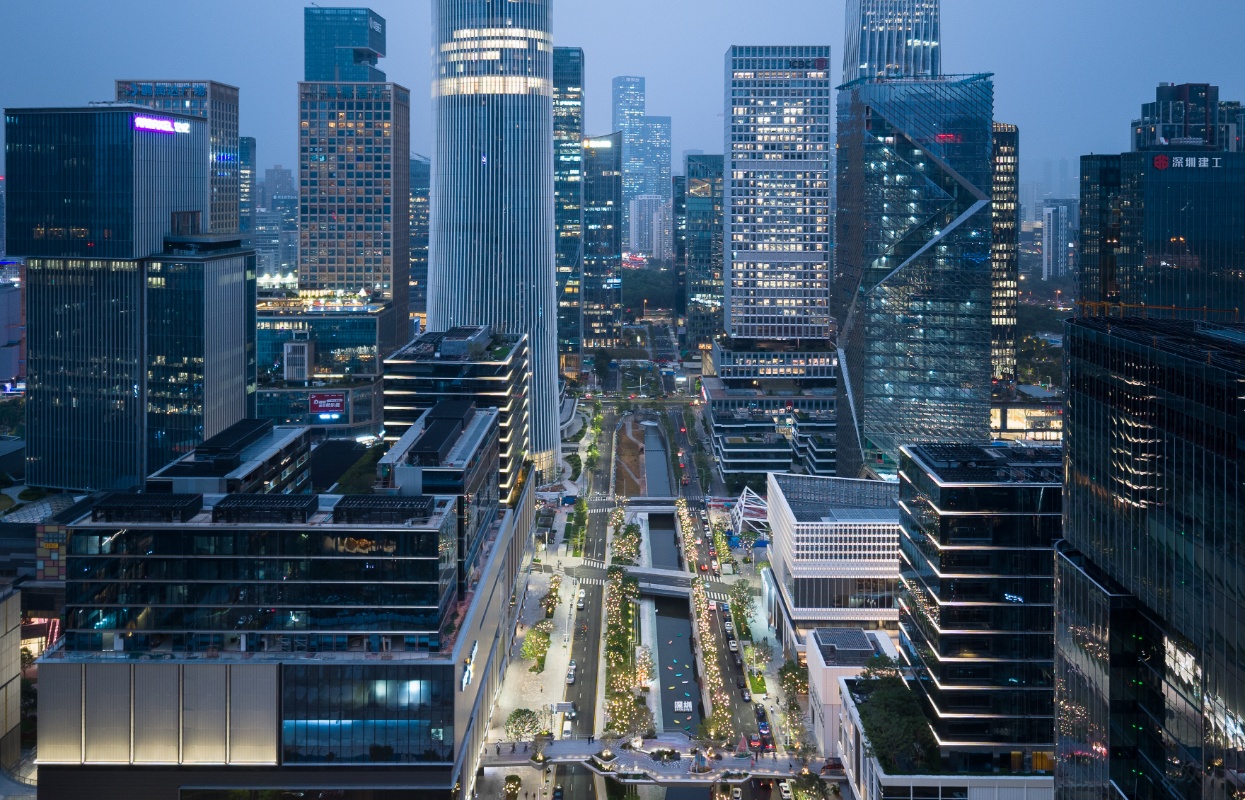
Building a contemporary city means making connections — within spaces, between spaces, and most importantly, between people.
This was The Oval Partnership's goal for the Shenzhen Bay Cultural Plaza: to connect Shenzhen Bay with the broader urban context, creating a space for culture and community and, ultimately, a waterfront destination in the vein of Tokyo Bay or San Francisco Bay.
Contemporary Shenzhen is home to a burgeoning cultural ecosystem, and the site’s location in Houhai positions it as a key node close to established and emerging cultural institutions that position it as a culture-led complex. We set out first to reconnect the site with the urban fabric by linking the old bay area with new waterfronts and connecting transportation hubs to cultural platforms.
Our scope covered the site’s overall masterplanning, architectural design consultancy and most of the architecture, with selected architectural and facade elements developed by other project partners. Underpinning our approach was the use of proprietary tools and processes based on Digital Placemaking (DPM), enabling us to analyse the site and its potential at a deep level.
Re-stitching the City
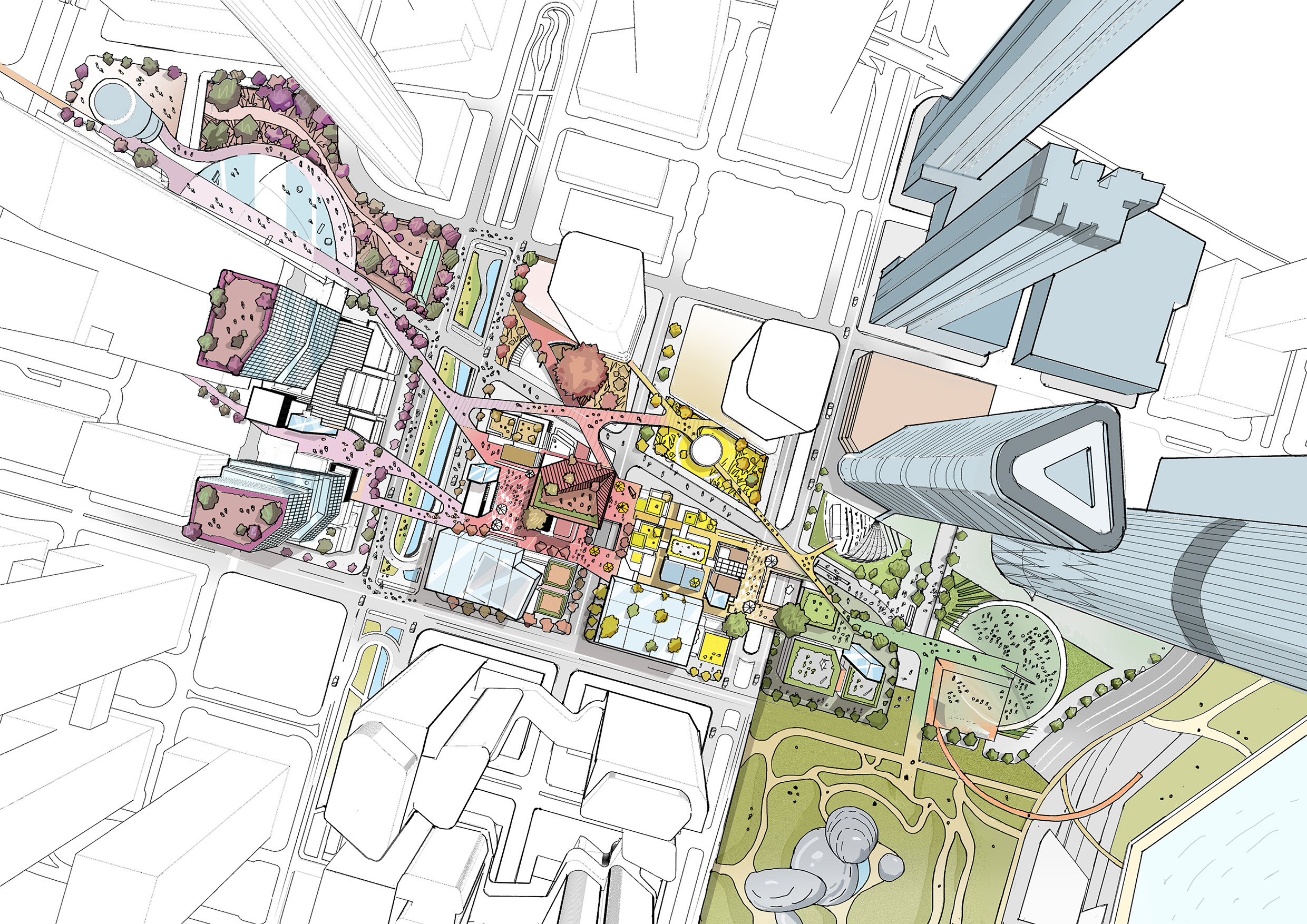
The Oval Partnership proposed the planning concept for Shenzhen Bay Cultural Plaza with “Re-stitching the City Fabric” as its core idea. The project seeks to reconnect fragmented urban parcels with the surrounding city fabric, creating a world-class, culture-led landmark for the bay area.
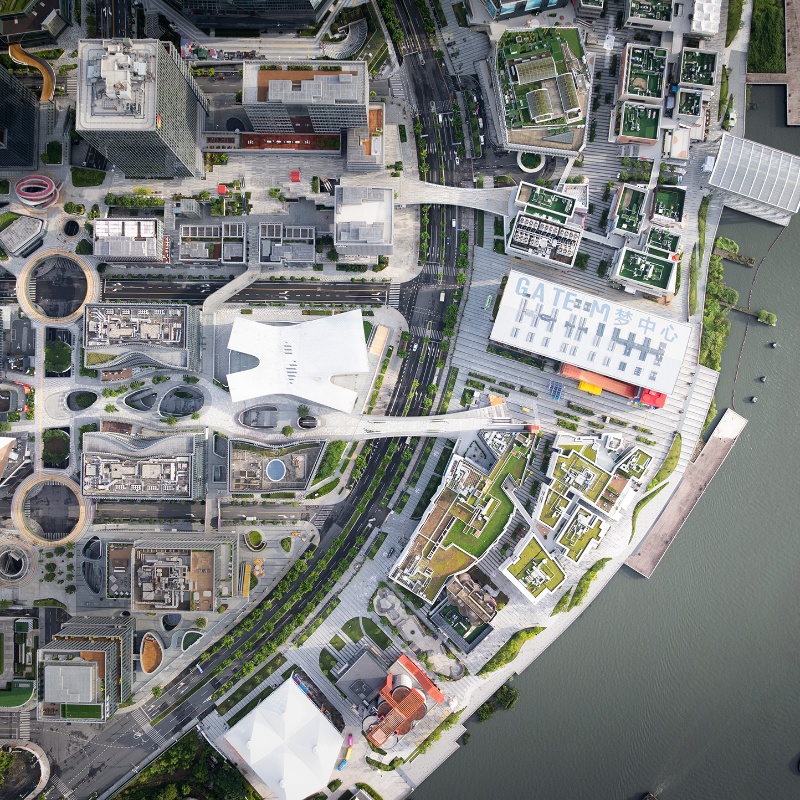
Located within the core cultural belt of Houhai in Nanshan District, Shenzhen, the project has a total gross floor area of approximately 166,000 sqm and is developed by China Resources Land. The site is divided into more than ten separated plots by major arterial roads, a condition that could easily result in spatial fragmentation under conventional development approaches.
Through a continuous, site-wide public realm spine and a multi-level pedestrian network, our team reconnects:
- The old bay hinterland ↔ the new waterfront
- The metro interchange (Houhai Station, Lines 2, 11 and 13) ↔ cultural platforms
- Landmark buildings ↔ open public spaces
- Everyday interactions between people and place
The planning adopts a strategy of Urban Fragmentation where building massing is restrained and articulated to prioritise a biophilic, socially friendly and green walkable urban framework. The scheme embraces the philosophy of “Manmanlai” (“take it slow”), introducing a more relaxed human rhythm in contrast to high-density urban haste.

We viewed the multi-level site as a kind of three-dimensional lattice, with potential points of connection spanning it both horizontally and vertically. Using DPM, we analysed the existing scheme and created an improved version in the masterplan. This included increasing and evening out pedestrian density, and creating strong visual connections through the site, from the sunken plaza to the ground level and the elevated level.
Key Innovations
Digital Placemaking
This is The Oval Partnership’s first project to fully integrate data-driven design from the earliest planning stage. Through pedestrian flow simulations, connectivity analysis and point-of-interest mapping, the team continuously optimised the pedestrian system and functional layout. Projections indicate a significant increase in footfall (up to 30–60% in selected areas) alongside enhanced commercial value.
Creative Cultural Villages
The development is organised into five themed “villages” — Field, Terrace, Townhall, Lighthouse and The Bay. Each has a distinct character and blends cultural, commercial and leisure functions, forming a diverse and multi-layered cultural ecosystem.
TOD + Culture-Led Development
The project strengthens Transit-Oriented Development (TOD) principles while positioning itself as a key platform supporting Shenzhen’s ambition to become a global cultural hub. It promotes inclusive communities, green connectivity and human-centred public spaces.
Through data simulation, the strategy informed the design of public spaces and circulation systems, weaving together a highly permeable and walkable urban network. The proposal also quantitatively evaluated improvements in footfall distribution and accessibility across different plots.
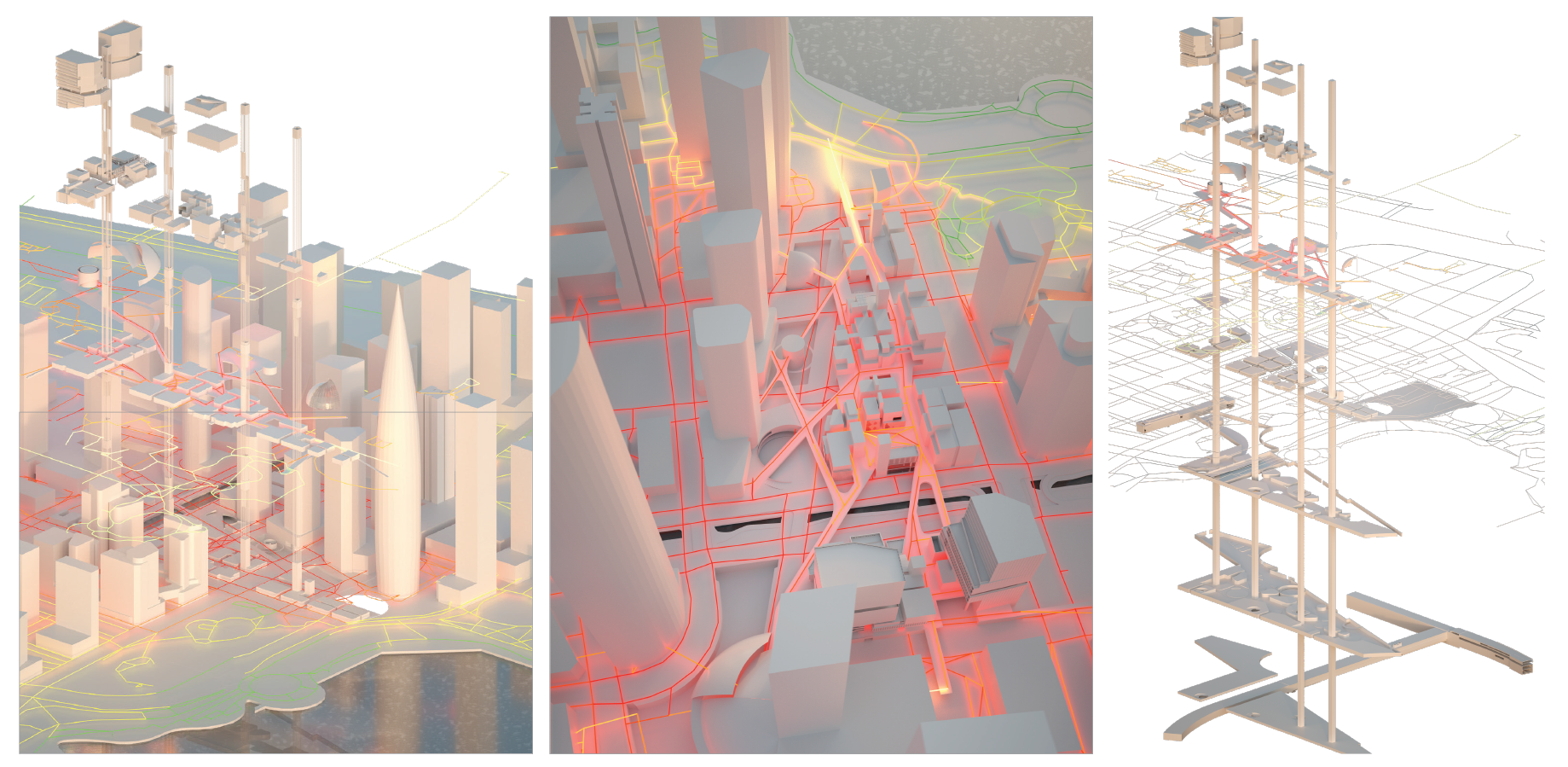
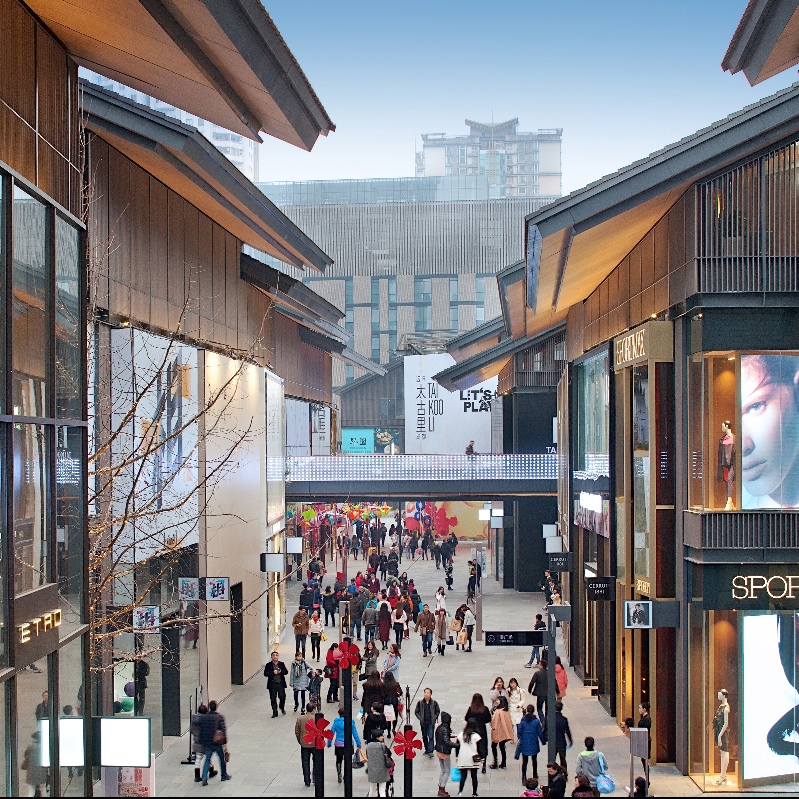
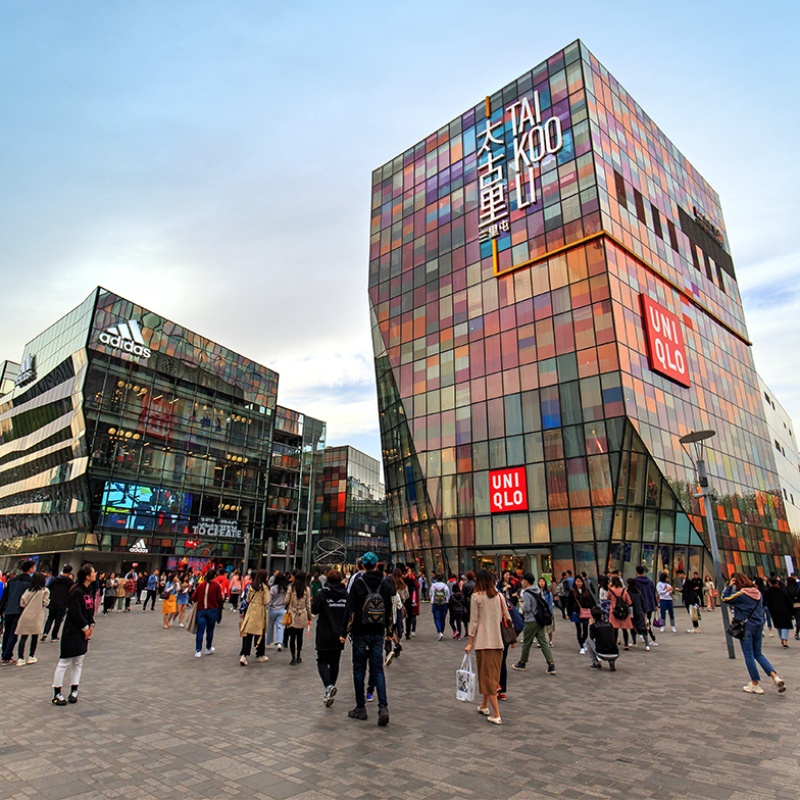
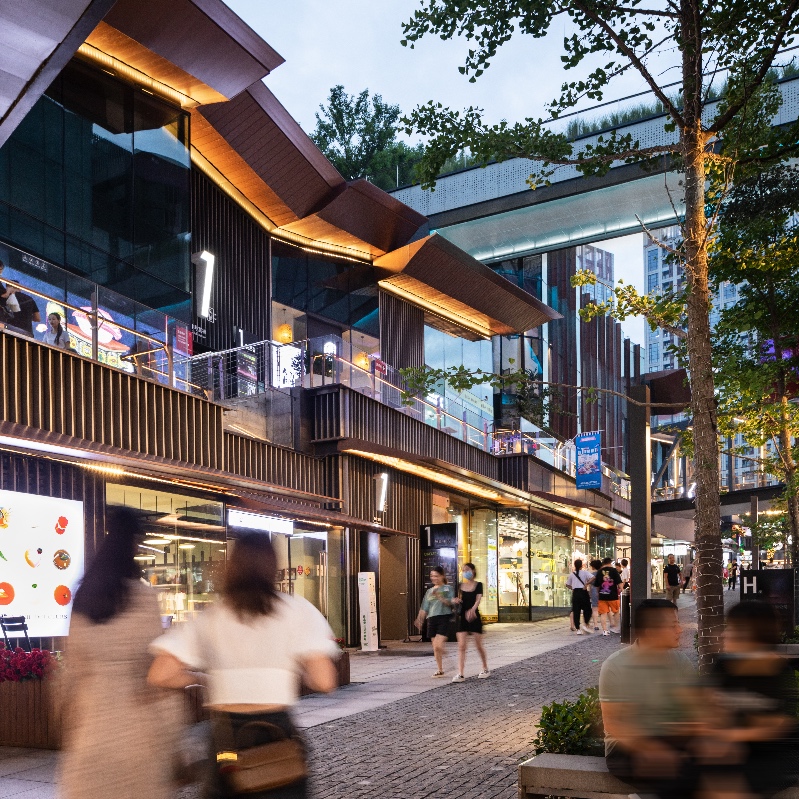
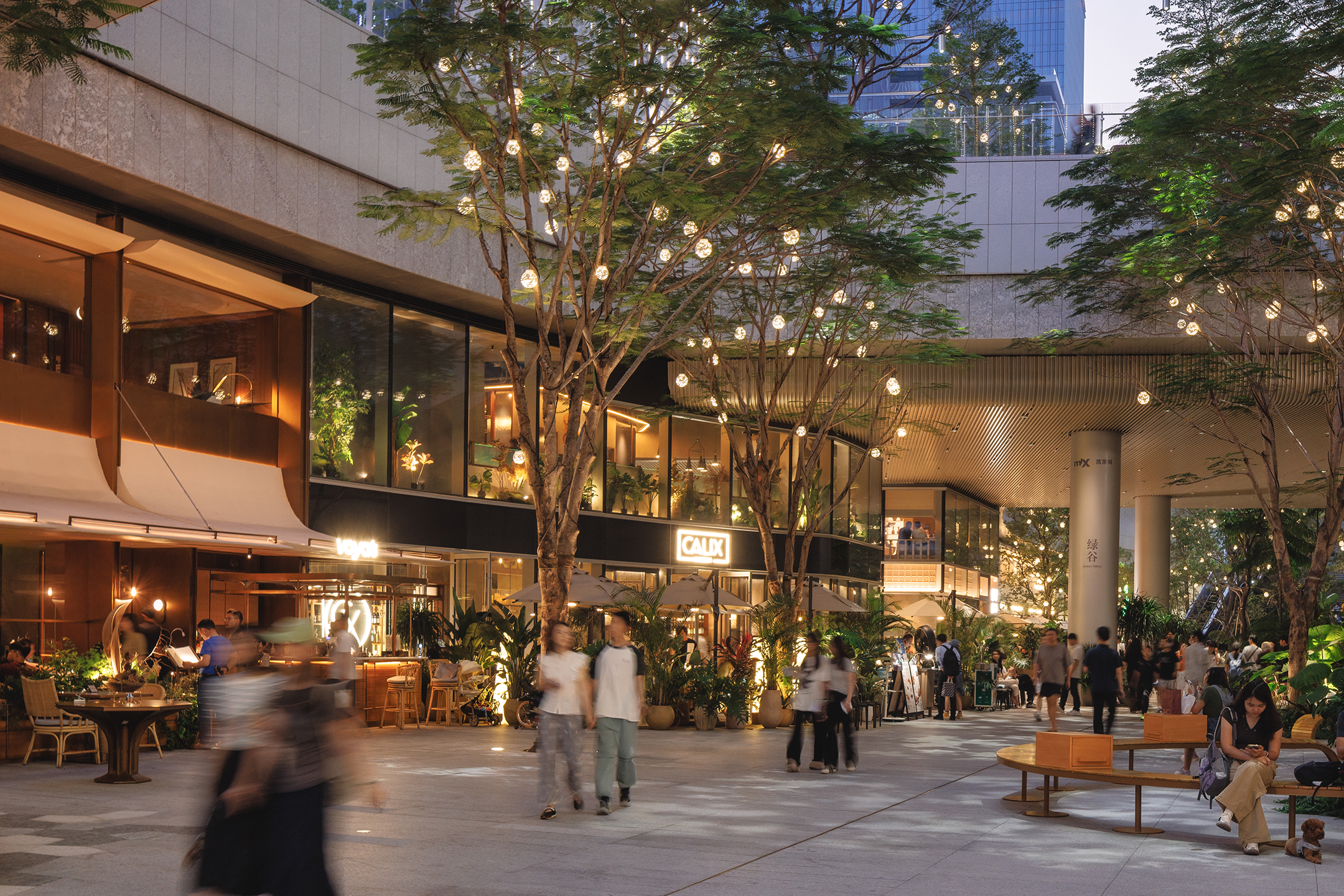
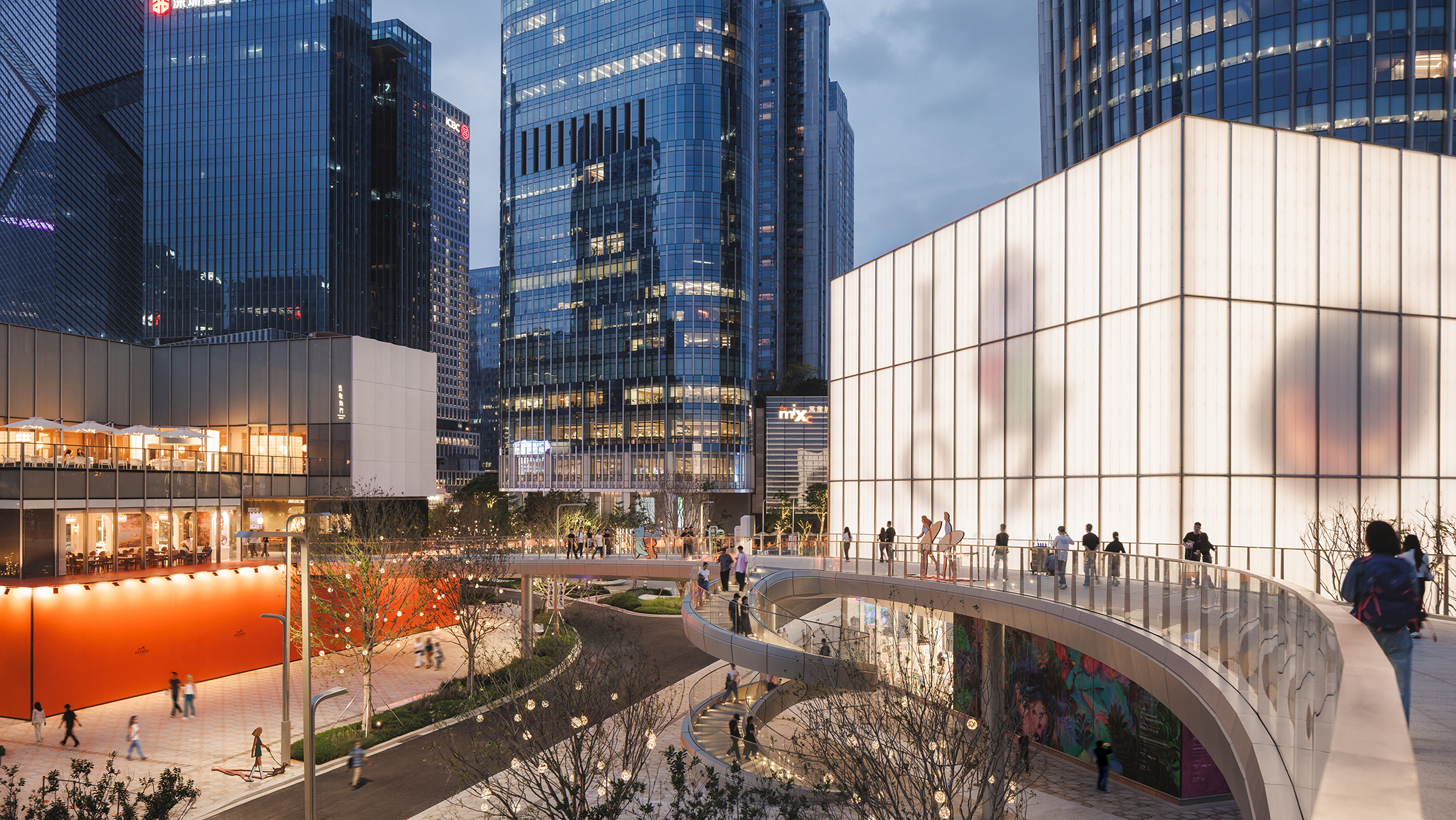
In this way, we created a new connected public realm interweaving cultural elements that incorporate local crafts, brands and people, developed in collaboration with Philip Dodd of Made in China. The result is a series of ‘villages’— Field, Terrace, Townhall, Lighthouse and the Bay — each offering its own character and mixed uses. Carefully planned street routes, squares, terraces, alleys and open space invite people to interact and create community stories. What’s notable about the architecture is its absence: built elements step aside for landscaping that provides climate control as well as settings for productive horticulture, al fresco time and shared moments, while three-dimensional pedestrian networks — ground paths, elevated walks, and underground spaces with shops and greenery — link transit, culture and the bay to create walkable social spaces.
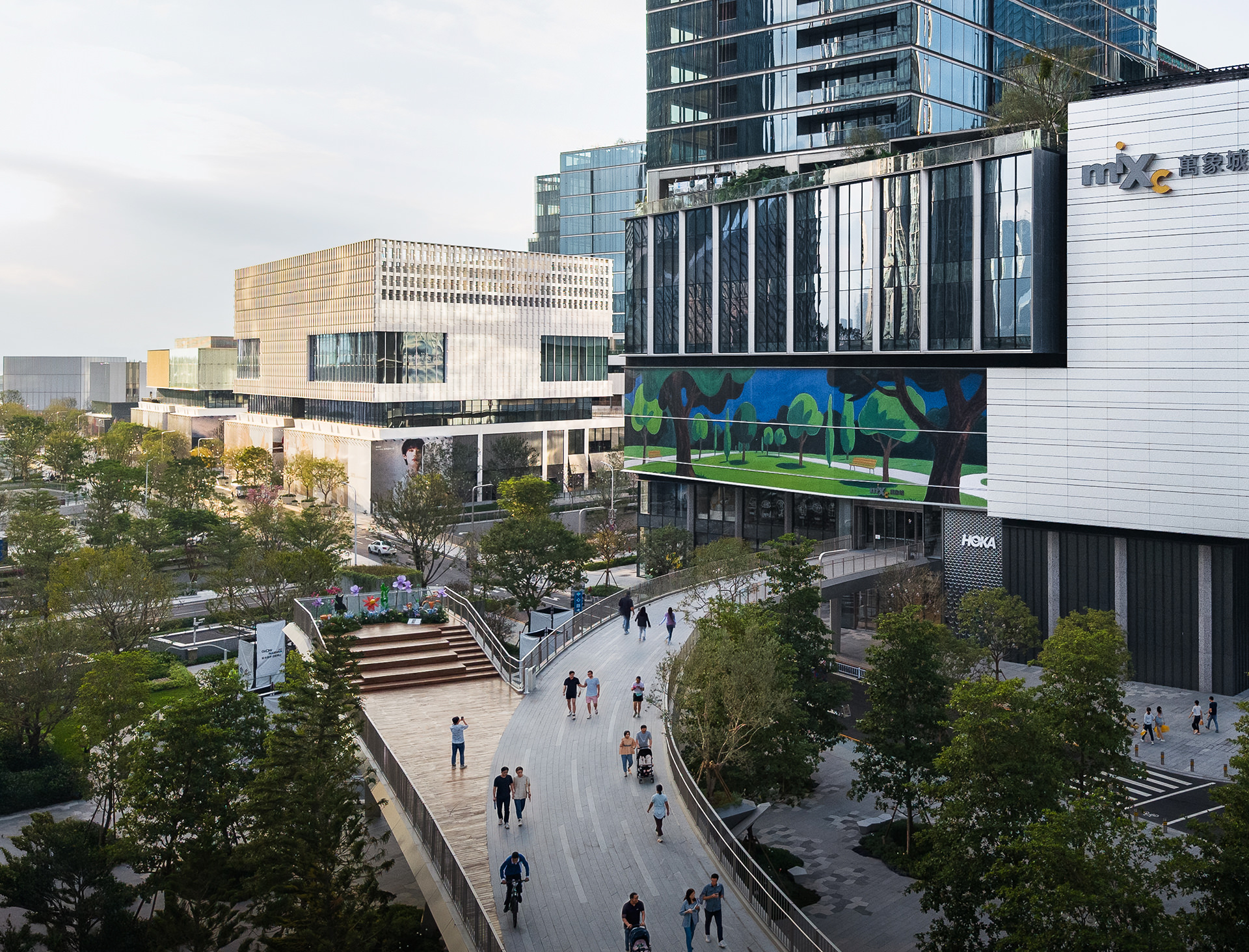
Image courtesy of Shenzhen Bay MIXC
The deliberate eco-cultural layout is an antidote to Shenzhen’s frenetic pace, embracing the idea of manmanlai (‘take it slow’) and encouraging unhurried engagement with the contiguous public spaces, elevated streets and treewalks above and the subterranean ‘green valleys’ below. At the same time, the cultural programming harnesses Shenzhen’s ‘forever young’ vitality, creating spaces for the next generation to flourish by harmonising creativity, technology and ecology to serve the city’s diverse emerging communities. Importantly, the entire space remains profoundly local, highlighting authentic Shenzhen elements for a destination that appeals internationally yet feels distinctly rooted.
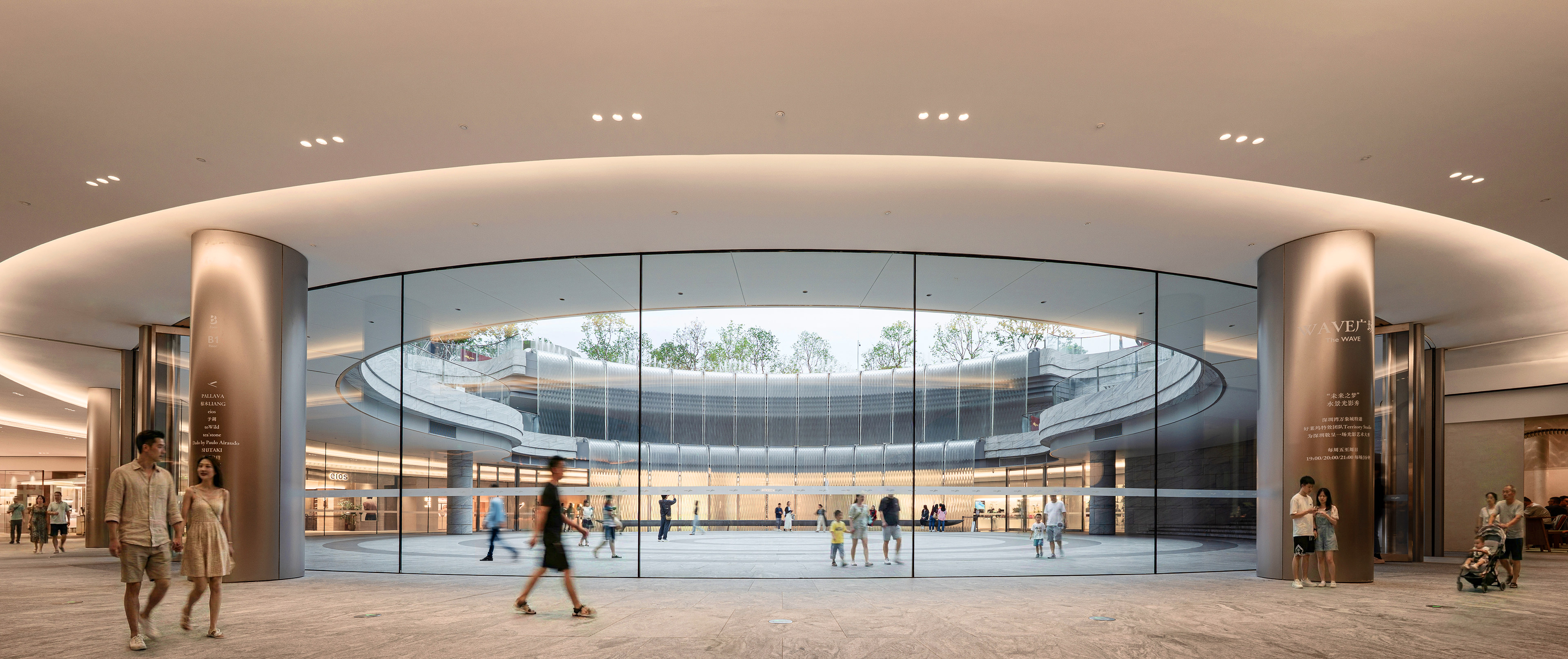
Image courtesy of Shenzhen Bay MIXC
Shenzhen Bay Cultural Plaza’s sense of connection is not just social but also material: locally, attractions like Shenzhen MixC and Window of the World are nearby, with three metro lines offering seamless access to core business districts, Shenzhen Bao'an Airport, Xili Station and beyond. The project also integrates with Hong Kong via Shenzhen Bay Port, helping to create a ‘one-hour living circle’.
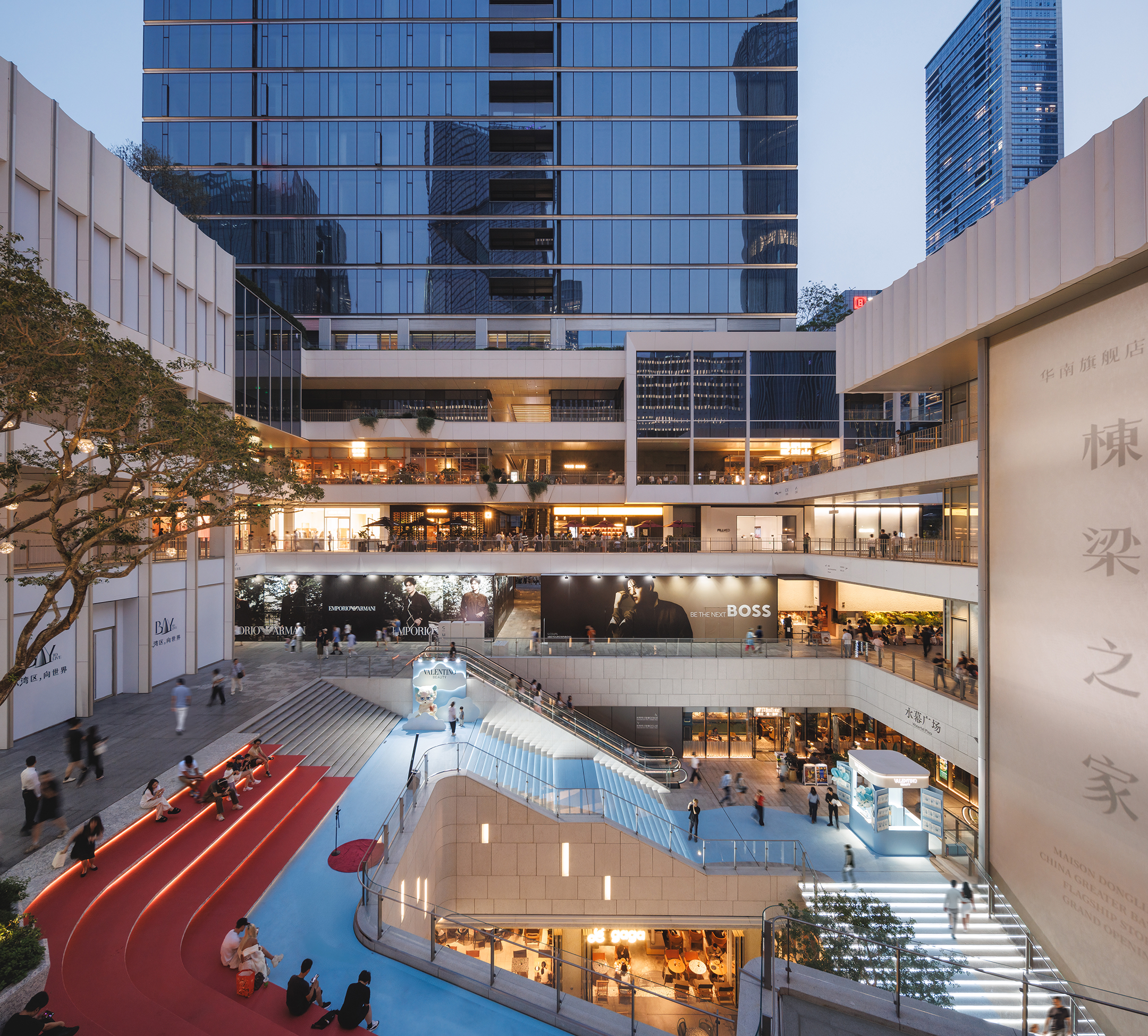
Through our people-centric approach to placemaking, supported by a rigorous methodology that’s equally analytical and empathetic, we and our partners have created a destination that embodies connection, and by doing so creates a space where the next generation of people can realise the next-generation urban environment.
Banner image courtesy of Shenzhen Bay MIXC.